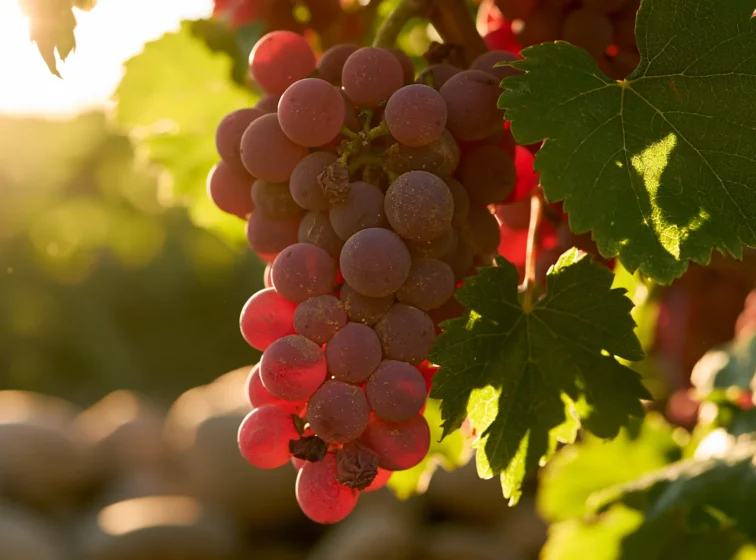
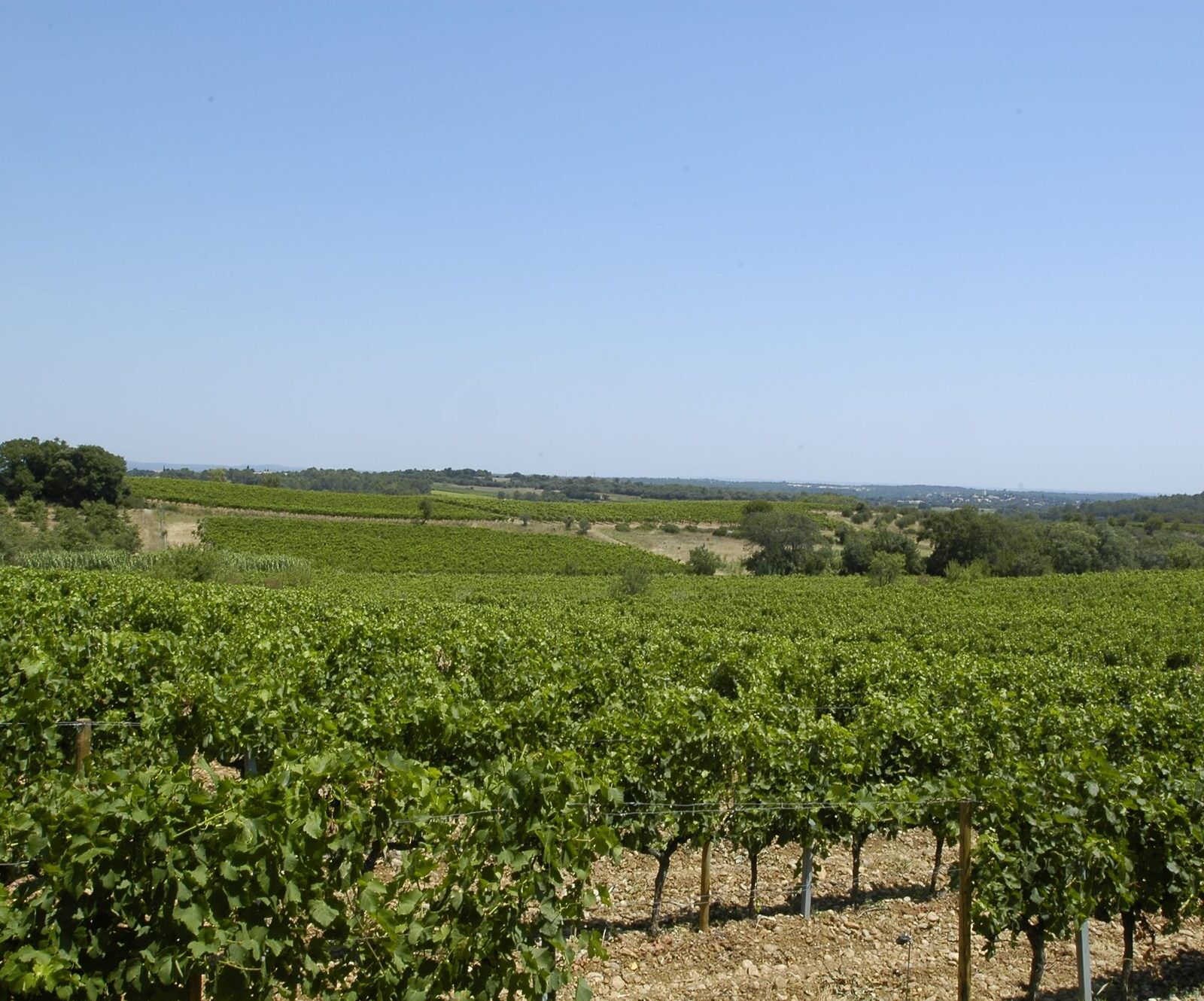
When Gérard Bru planted the Saint-Drézéry vineyard, he chose two grapes, Syrah and Grenache. Today the latter gives the estate's reds their fruit and its rosés their character.
Grenache Noir comes from Spain, where it is called garnacha. It has spread all around the Mediterranean, from the Rhône Valley to Roussillon, because it copes with heat, drought and wind. Its red wines are round, with supple tannins and aromas of ripe red fruit, cherry and spice. As a rosé, it gives pale, fruity juices that keep some roundness.
At Puech-Haut, Gérard Bru planted it with Syrah as soon as the vineyard was created, on clay-limestone soils covered with rolled pebbles: they are the estate's two founding grapes. Today it is found in most of the reds and rosés, at Puech-Haut, Lavabre and Theyron.
In the reds, it brings fruit and roundness. It makes up 20% of Tête de Bélier red, with Syrah, Mourvèdre and Carignan, and 45% of Prestige red. In Pic Saint-Loup, at Château Lavabre, it complements Syrah. 40ème, Loup du Pic and Theyron red also contain it. These reds are served at around 16 °C; blended with Syrah, they keep longer than the rosés.
In the rosés, it is the estate's main grape, the one that gives them their character. Argali rosé, the ambassador cuvée, blends 60% Grenache and 40% Cinsault. The grapes are pressed directly, the juice ferments at a low temperature, between 12 and 14 °C, and malolactic fermentation is blocked to preserve freshness. Grenache also goes into the Watusi, Theyron, Loup du Pic and Tête de Bélier rosés. These rosés are drunk young and served between 6 and 10 °C, depending on the cuvée.
All the estate's vines are farmed sustainably. The soils are worked mechanically and, from autumn to spring, eighty sheep led by a shepherd keep the rows free of weeds.
Grenache reds go well with barbecues, charcuterie and Mediterranean cooking. The rosés, served chilled, pair with salads, grilled fish and summer dishes.