

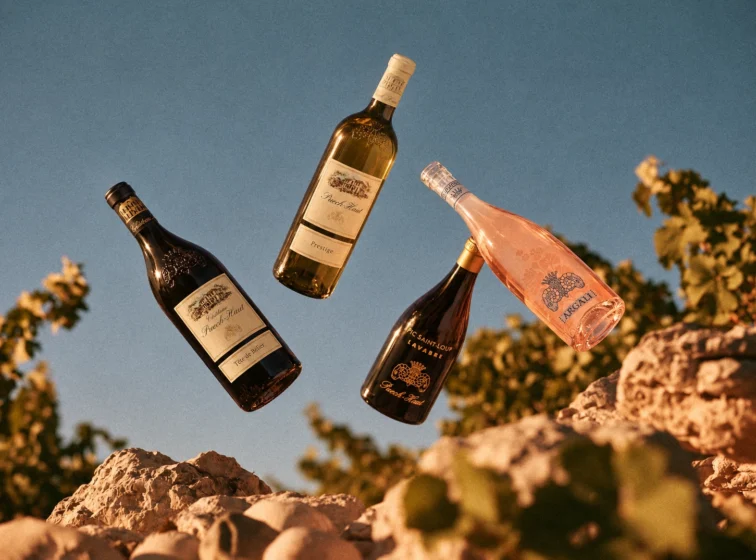
The 75 cl bottle is the benchmark, but it is far from the only one. From the magnum to the wine box by way of the jeroboam, wine comes in a wide variety of containers, each with its own name, its own use and sometimes its own story. Choosing a format is not just a question of quantity: it affects how the wine develops, how it is served and how it is shared. Here is how to find your way, and which formats Château Puech-Haut offers.
Wine bottle names, from the quarter bottle to the nebuchadnezzar
Small formats first: the quarter bottle, or piccolo, holds 20 cl, and the half bottle 37.5 cl. Then comes the classic 75 cl bottle, which has become the standard in most wine regions. Beyond it begin the large formats, often named after kings and biblical figures, a tradition whose origin is still debated.
The magnum holds 1.5 litres, or two bottles. The double magnum, or jeroboam depending on the region, holds 3 litres. Then come the rehoboam (4.5 litres), the methuselah (6 litres), the salmanazar (9 litres), the balthazar (12 litres) and the nebuchadnezzar (15 litres). These very large formats remain rare: they are kept for big celebrations, and serving them often takes two people.
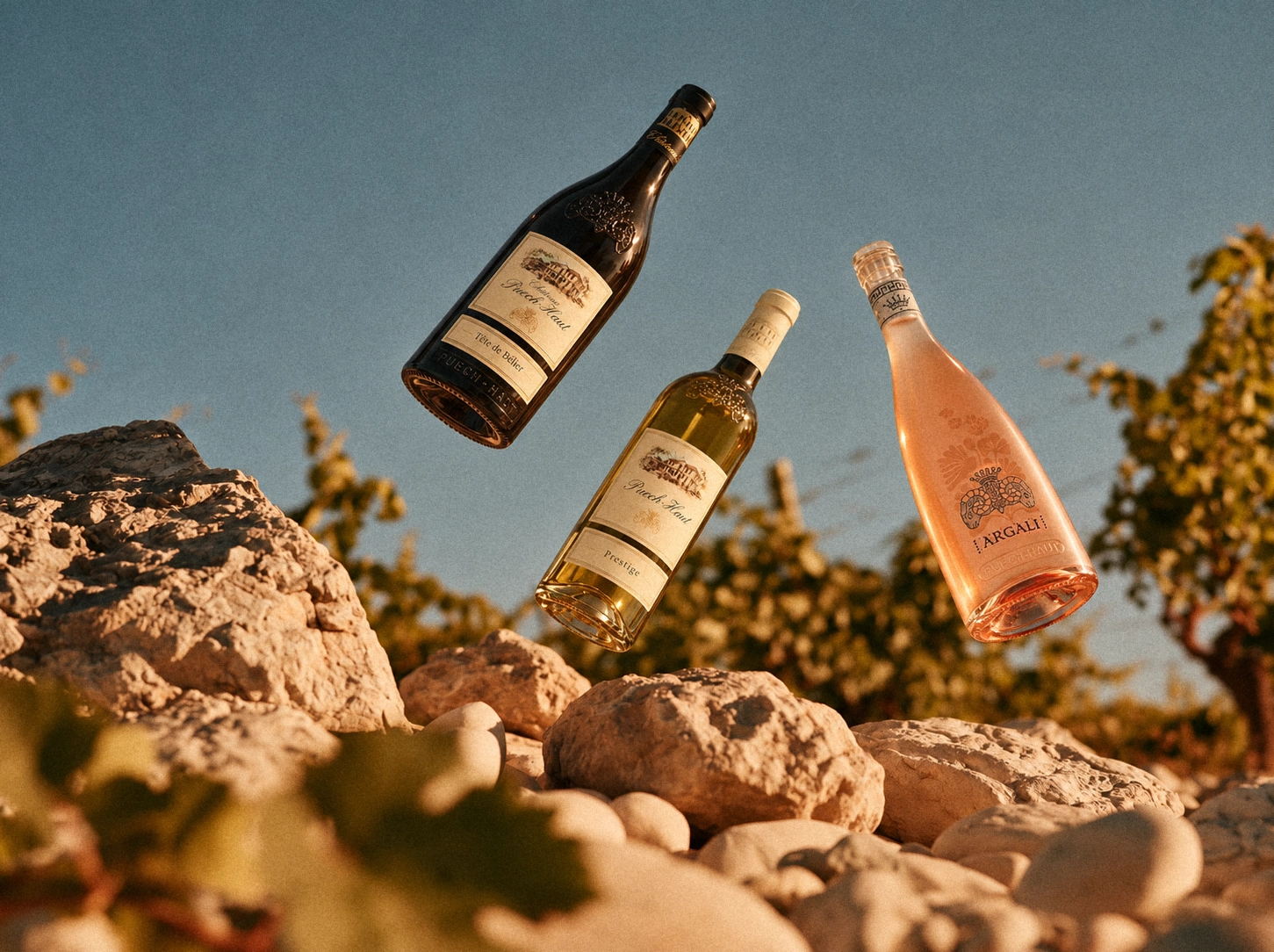
The magnum: how many litres and how many glasses?
A magnum of wine holds 1.5 litres, the equivalent of two classic bottles. With a serving of about 12 cl per glass, a 75 cl bottle gives six glasses, a magnum about twelve. It is the ideal format for a table of six to eight people over a meal.
Beyond the quantity, the magnum has real presence at the table. It marks an occasion, catches the eye and invites sharing. That is why it is so often found at year-end celebrations, weddings and birthdays. To serve it, simply allow a little more time in the fridge for a white or a rosé: with twice the volume, the wine takes longer to reach its temperature.
Why does wine age better in magnum?
It is a widespread belief among wine lovers, and it rests on a simple explanation. In a bottle, the wine develops in contact with the small amount of air between the cork and the liquid, and with the oxygen that passes very slowly through the cork. Yet the neck of a magnum is roughly the same as that of a classic bottle, for twice the volume of wine. The proportion of oxygen to wine is therefore lower.
The result: the wine oxidises more slowly and develops more steadily. The large volume also cushions temperature changes better, which protects the wine during ageing. That is why wines for laying down are often sought after in magnum. Conversely, for a wine to drink young, such as a rosé or a white from the latest vintage, the magnum is above all a format for sharing: it is not for waiting, but for bringing people together.
Jeroboam or double magnum: a question of region
The vocabulary of large formats varies from one region to another, which causes some confusion. In Champagne and Burgundy, the jeroboam is a 3-litre bottle. In Bordeaux, the 3-litre bottle is rather called a double magnum, and the name jeroboam is traditionally given to a 4.5-litre format.
To avoid misunderstandings, the safest thing is to look at the capacity shown on the label rather than the name. Whatever the name, it is a spectacular format, equal to four classic bottles, which comes into its own at large receptions.
The wine box, a format made for sharing
The wine box, also called bag-in-box or wine fountain, holds the wine in a flexible bag inside a carton or other container, with a tap for serving. Its great advantage: each time you pour, the bag contracts and no air comes into contact with the wine. The wine therefore oxidises much more slowly than in an opened bottle and generally keeps for several weeks after opening.
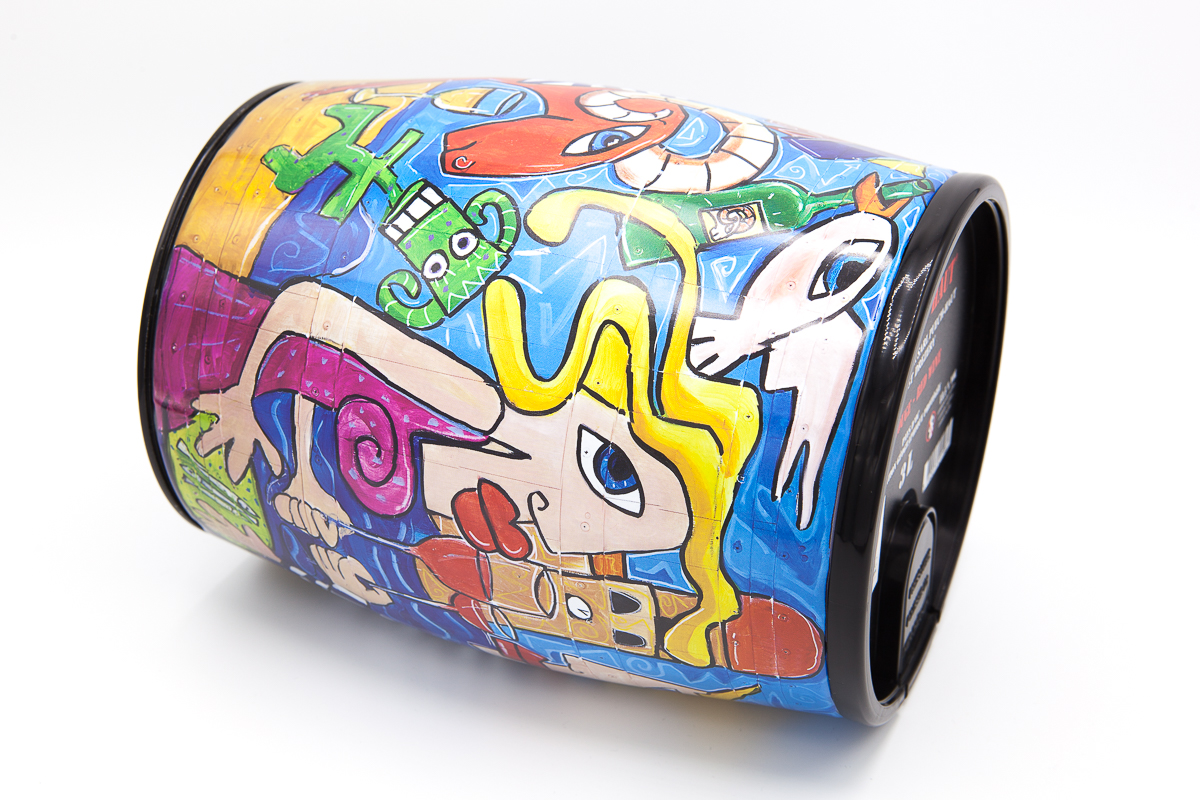
At Château Puech-Haut, this format has taken a very particular form: the Bib'Art, a 3-litre small barrel that takes the silhouette of one of the estate's casks and is dressed in an artist's work. It comes in red, white and rosé. Bib'Art white, for example, is our recommendation for a raclette around a big table.
Large formats at Puech-Haut
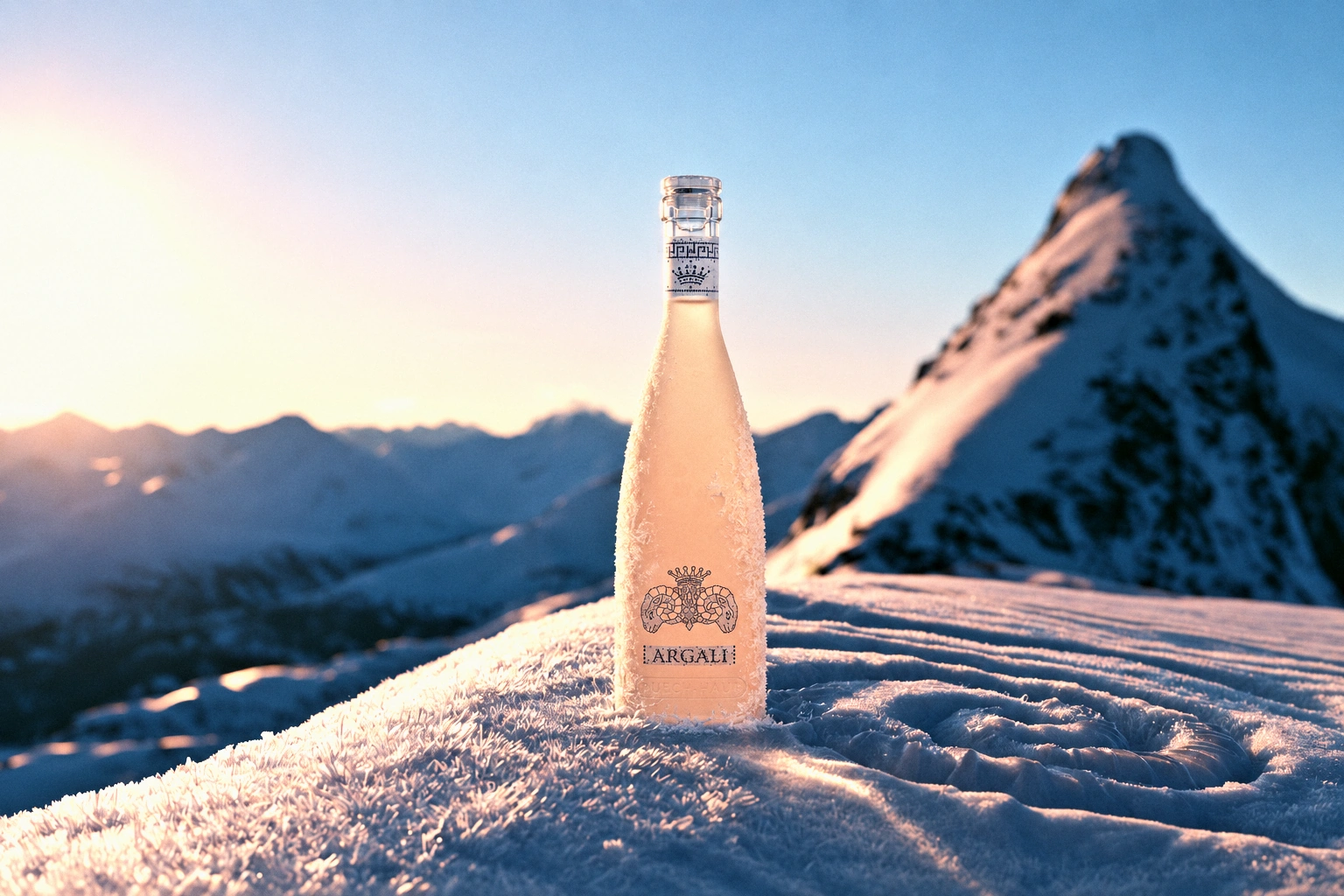
Several of the estate's cuvées are offered beyond the 75 cl bottle. Haut Perché, the winter rosé of the Argali range, comes in 75 cl, in a 150 cl magnum and in a 300 cl double magnum. Givré, its white counterpart, is offered in 75 cl and in magnum. These two cuvées, created for winter in the mountains, are presented in our article on Haut Perché and Givré.
To find out which formats are available for each of our cuvées, visit the our wines page and the page for each wine. To find out where to buy them, see the Where to find our products page.
Please enjoy responsibly. Excessive drinking is harmful to your health.
 Puech-Haut