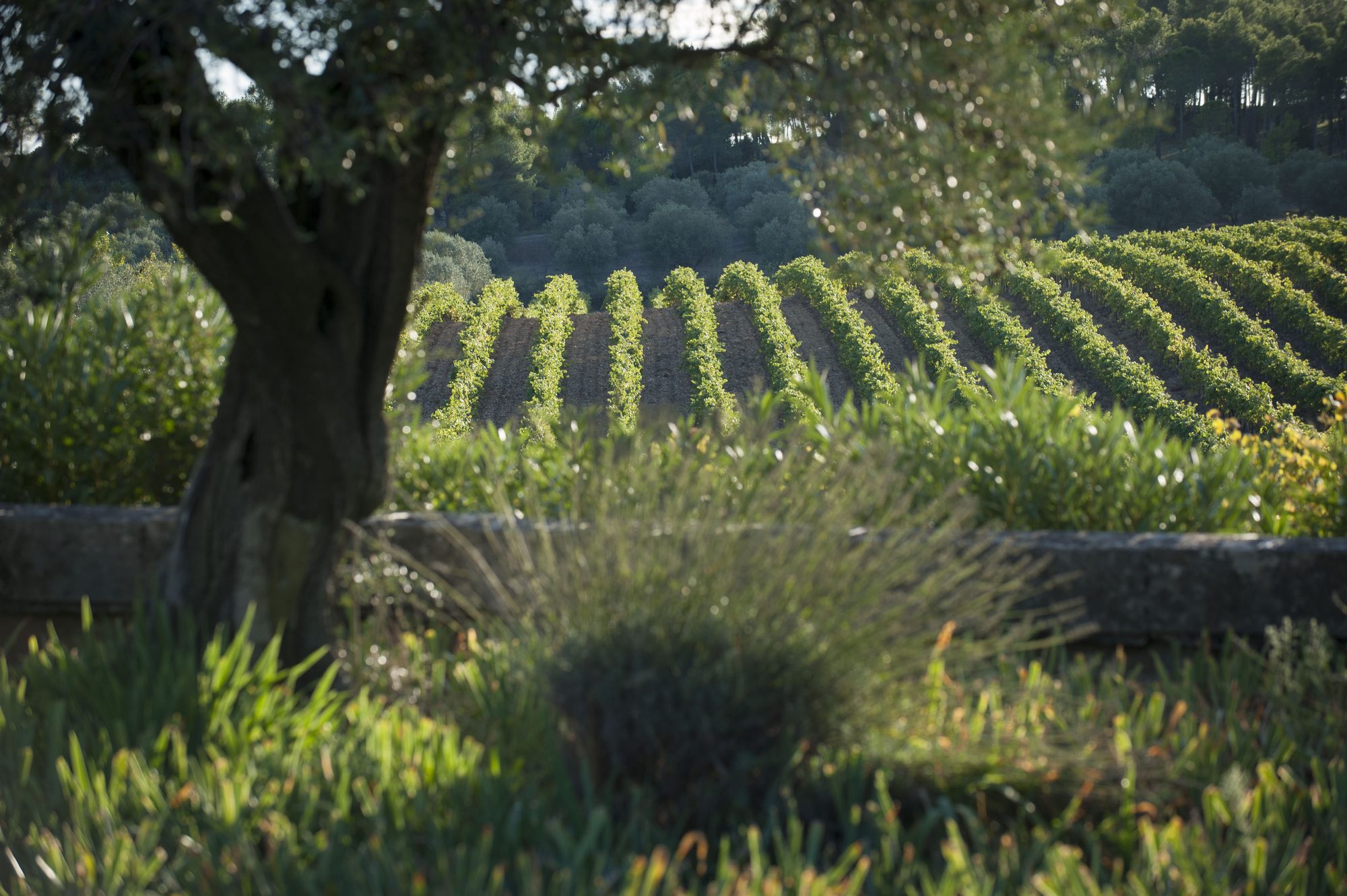
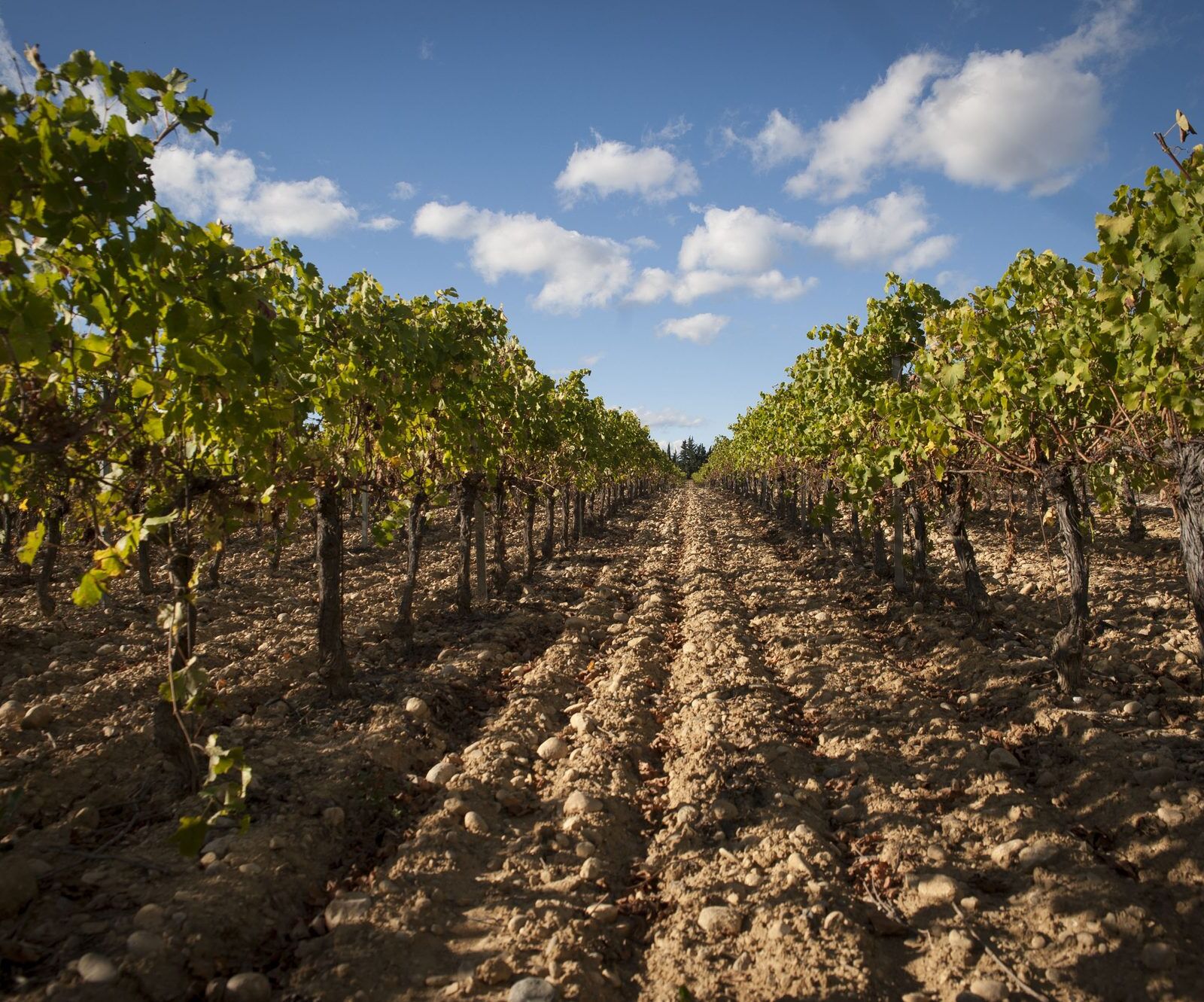
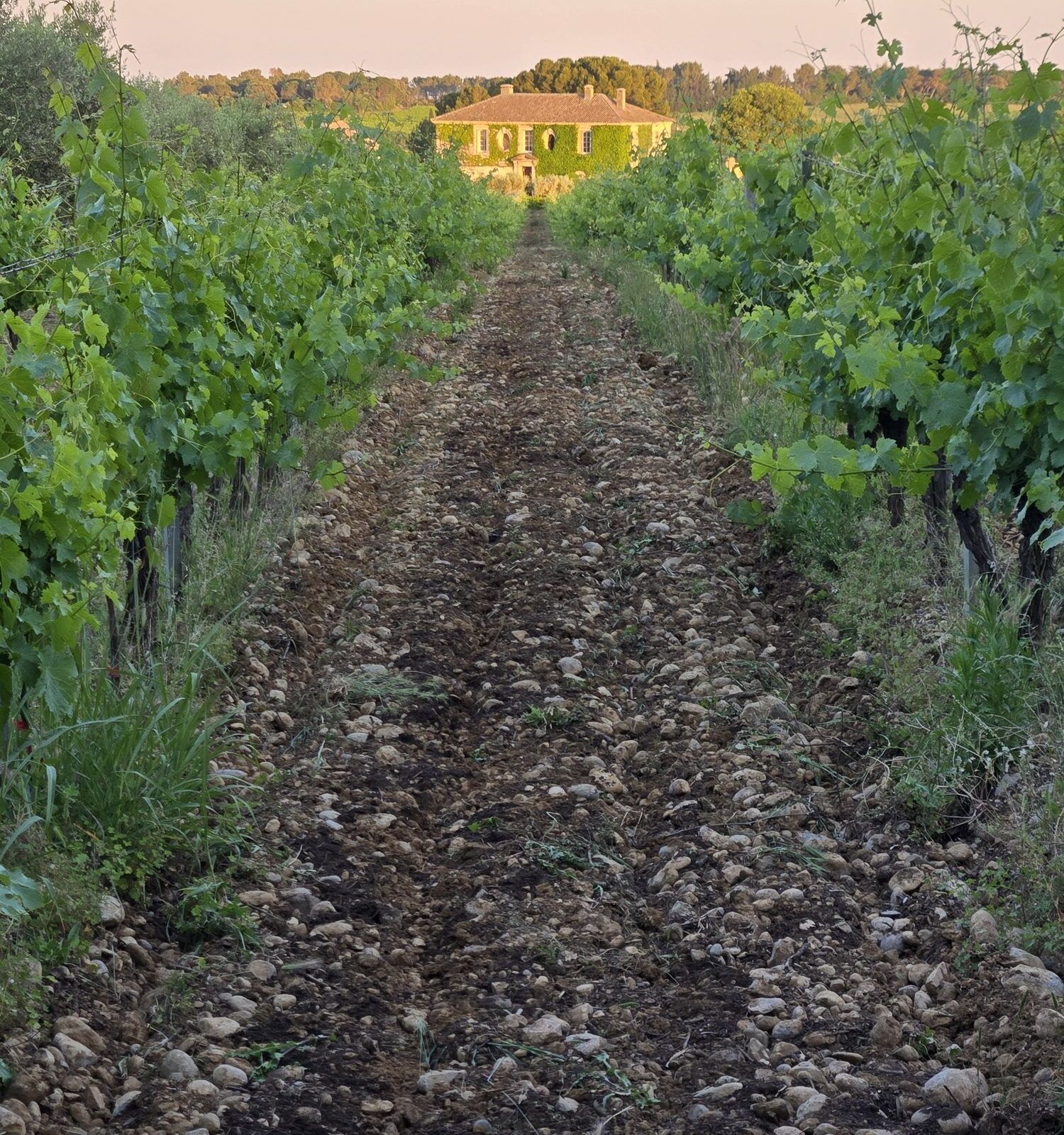
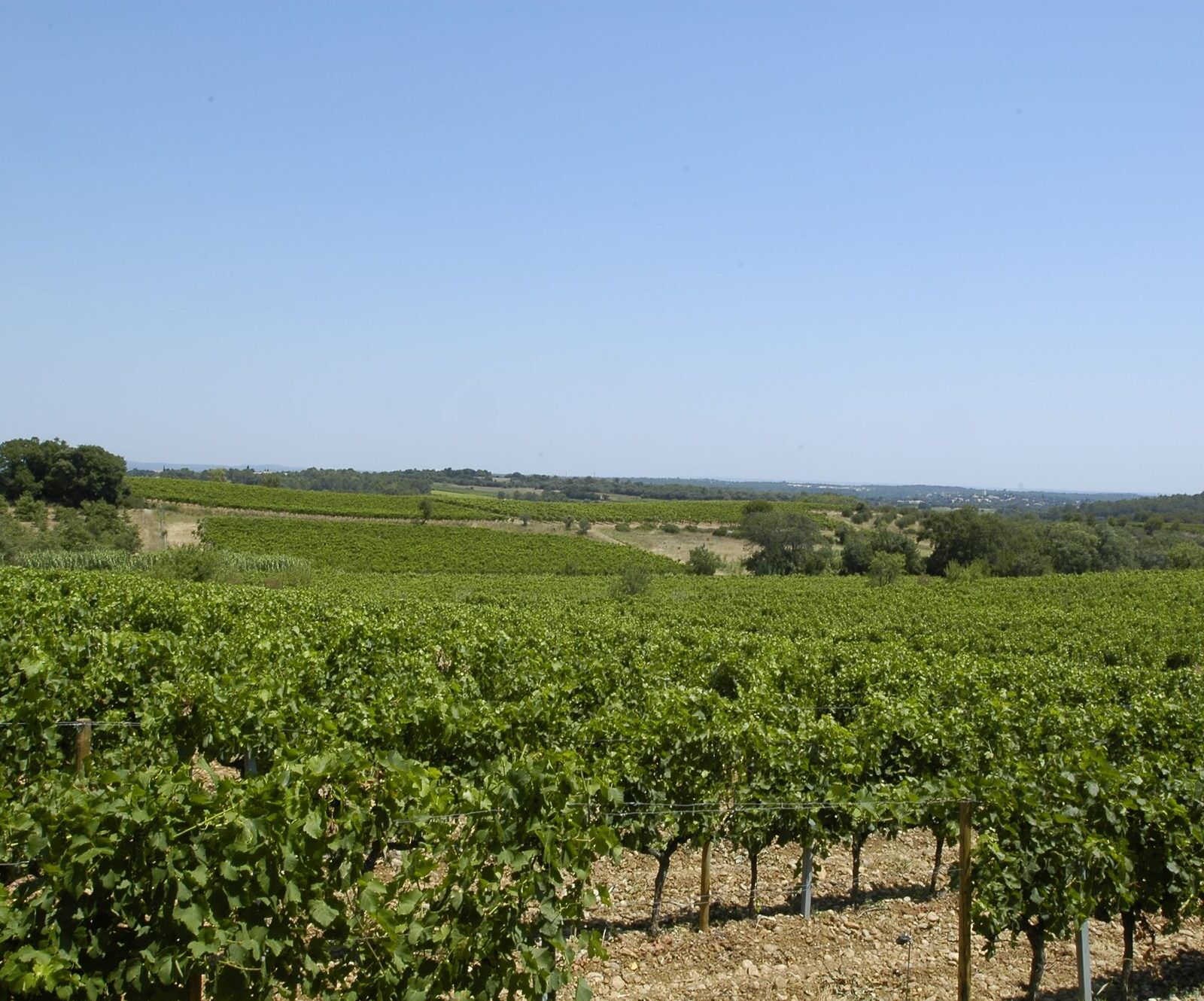
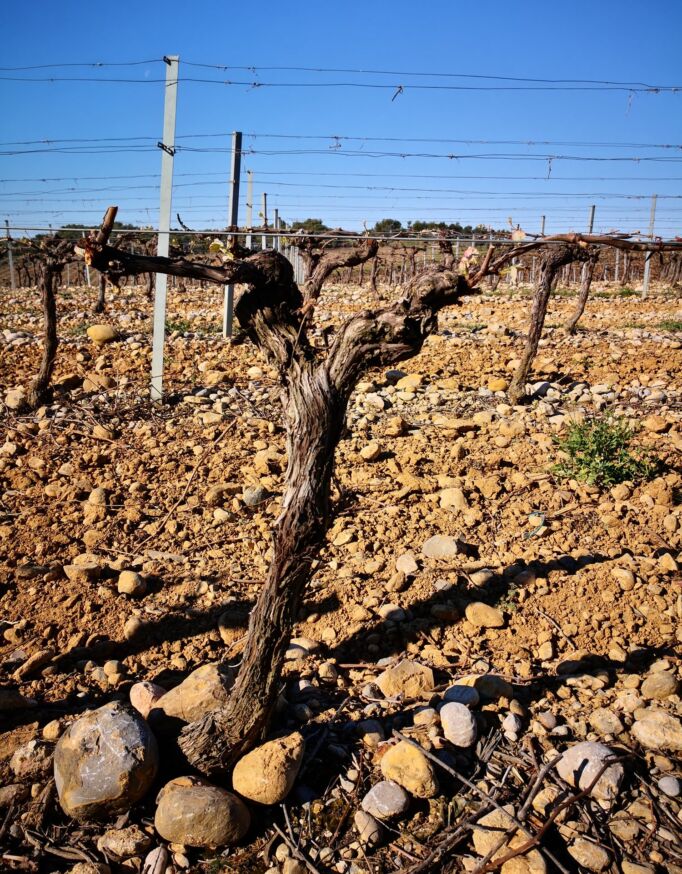
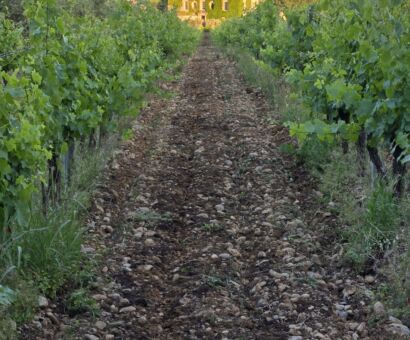
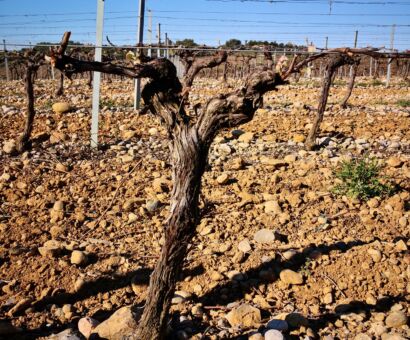
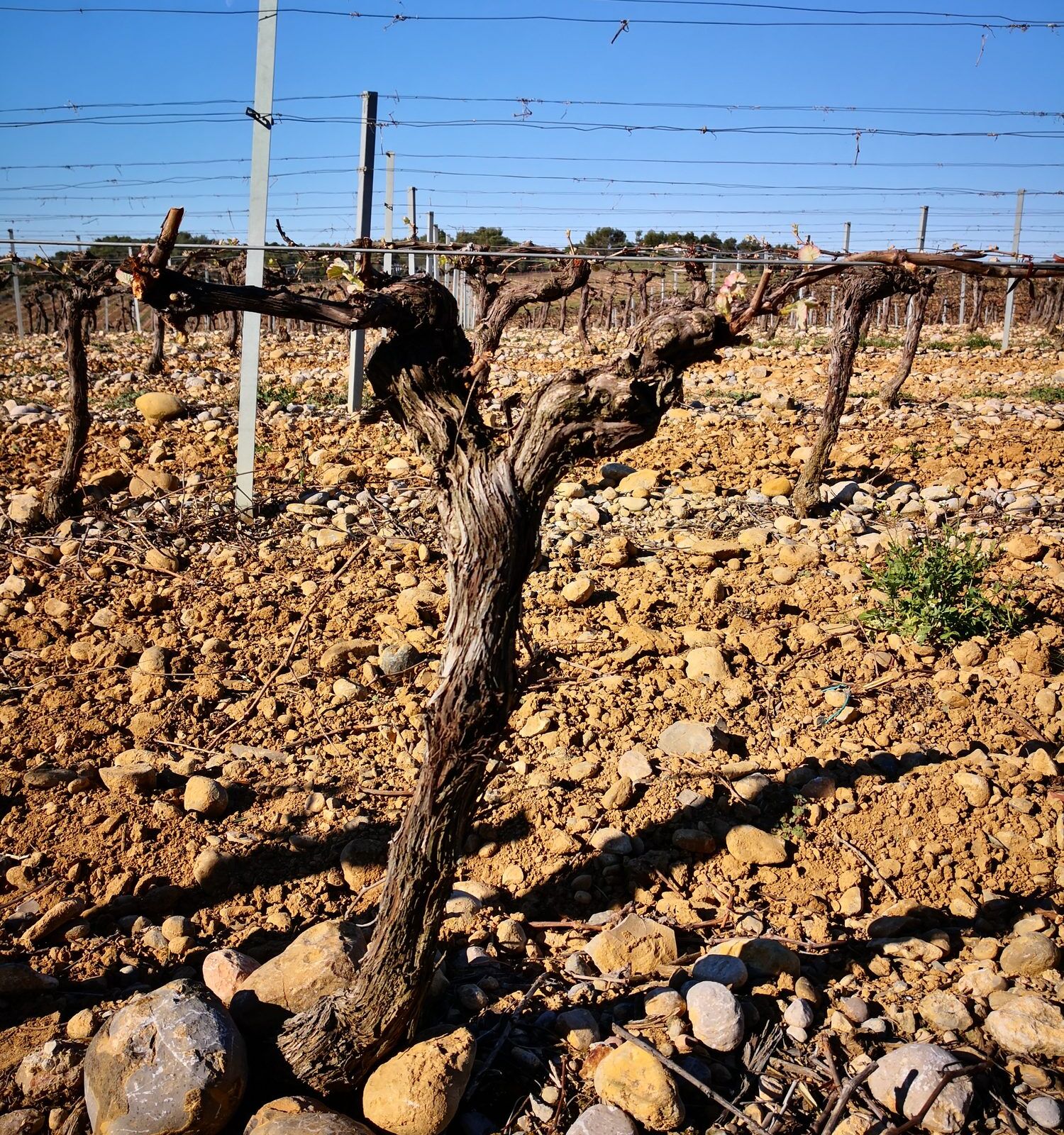
The rolled pebbles were left by the Rhône in the Quaternary, on clay-limestone soils, between 50 and 150 metres above sea level. They drain the water, store the heat of the day and give it back to the vines at night. The sea tempers the climate.
SAINT-DRÉZÉRY
A soil of rolled pebbles
THE ESTATE
A vineyard in a single block
Gérard Bru started from his grandmother's vineyard. In the 1970s, he bought the neighbouring plots one by one, between vines and garrigue, until he had brought together around a hundred hectares in a single block. The first harvest under the Puech-Haut label dates from 1994.
- of vines
- 165ha
- 1st harvest
- 1994
- above sea level
- 150m
- from Montpellier
- 16km
- estates
- 3
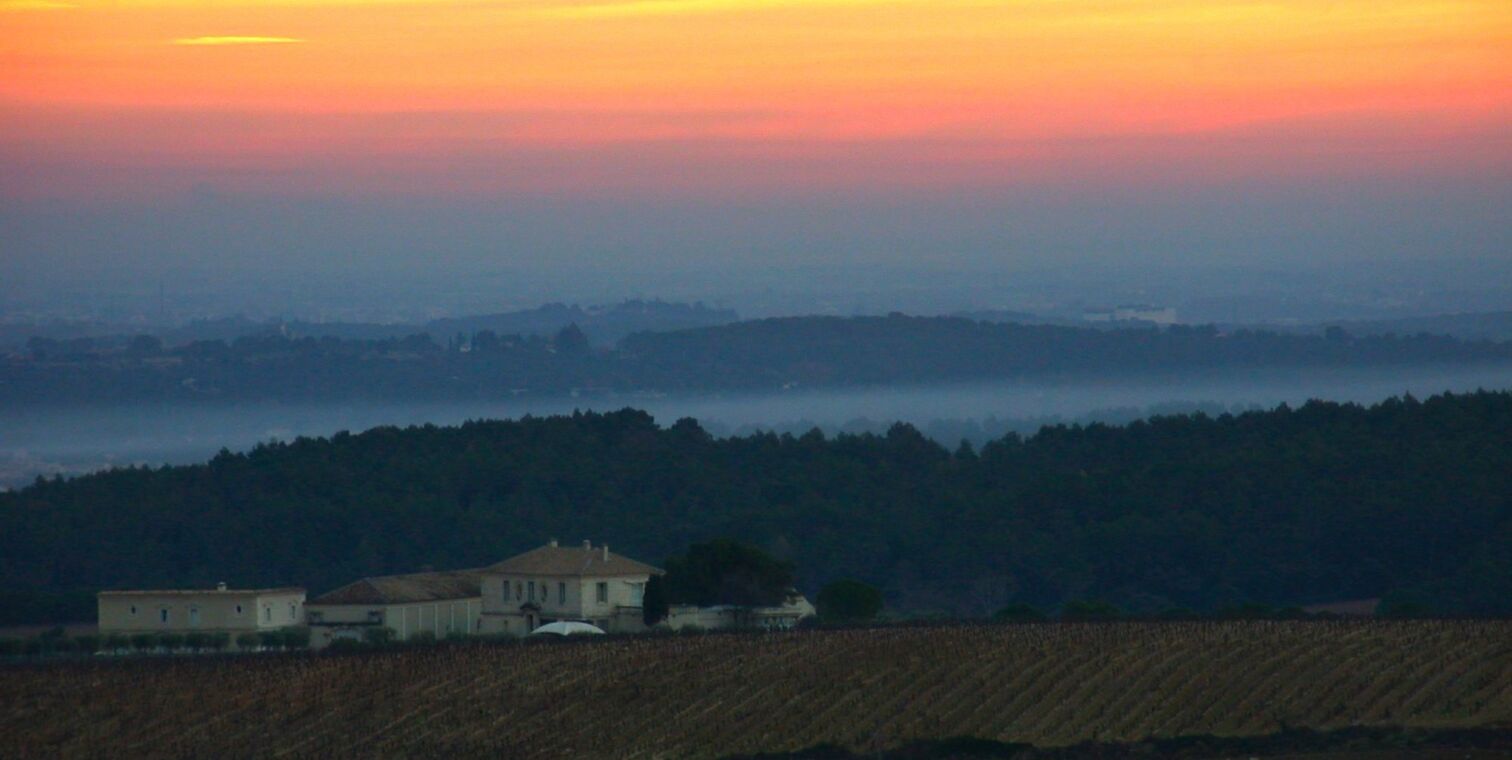
Puech means hill in Occitan: we are on one of the highest points in the area.Arnaud Demongeot
AT THE ESTATE
From soil to bottle
A Puech-Haut wine is made first in the vineyard, managed with sustainable farming on the rolled pebbles of Saint-Drézéry, then in the cellar, where each grape variety is worked separately until blending.
-
The soil
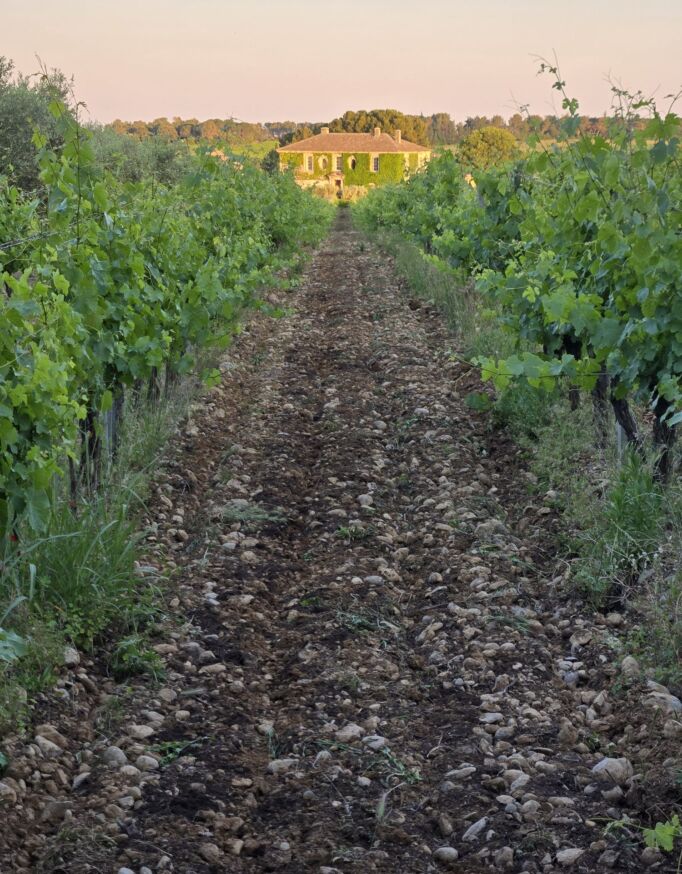
Worked mechanically. Some grass is left in place to keep the soil alive, and plant compost is spread every other year. -
The vine
Treated only with copper and sulphur. In winter, a shepherd leads eighty sheep through the rows to weed them. -
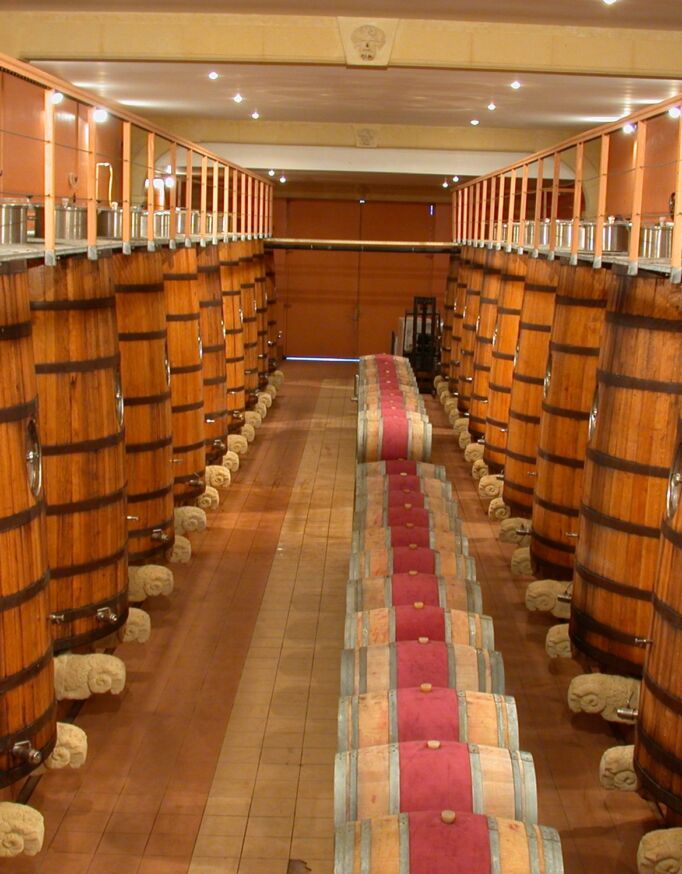
The cellar
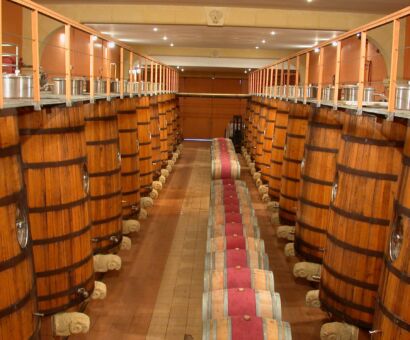
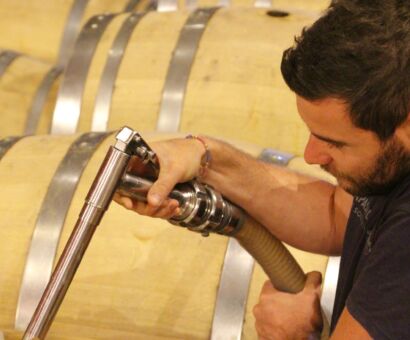
Each grape variety is vinified and aged separately, so that each plot keeps its character until blending. -
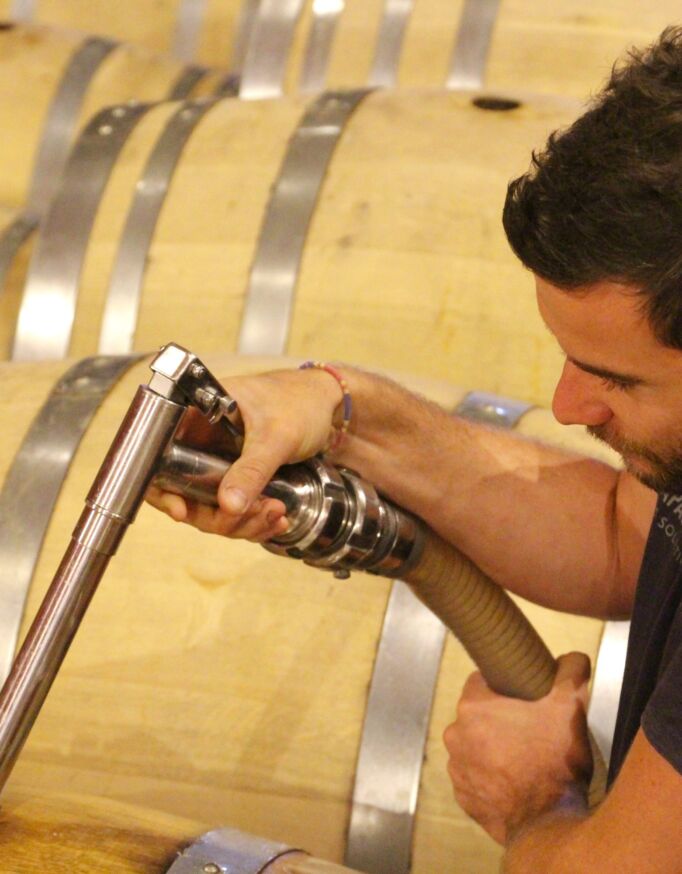
The blend
It comes after selective ageing of the grape varieties.
HISTORY
A very old vineyard
Vines have been grown in the Languedoc since Antiquity. After phylloxera, the vineyard reorganised around its appellations, including the AOP Languedoc, to which Saint-Drézéry adds its name.
Since Antiquity. The Romans developed vines around the Étang de Thau, near Balaruc and Loupian. From there, they spread across the whole Languedoc, which became one of the largest vineyards in France.
After phylloxera. In the 19th century, an aphid from America, phylloxera, attacked the roots and destroyed most French vines. In the Languedoc, those on the coastal sands were spared, because the insect cannot move through sand. They supplied grafts, and the vineyard was replanted on resistant American rootstocks, as in the rest of France.
The Languedoc appellation. It succeeded the Coteaux du Languedoc in 2007 and covers most of the vineyard. A dozen or so localities may add their name to the appellation; Saint-Drézéry is one of them, and Château Puech-Haut produces its wines under this designation.
In Saint-Drézéry. The estate lies 16 km north-east of Montpellier, between the Languedoc plain and the first hills of Pic Saint-Loup. Its vineyard rises between 50 and 150 metres above sea level, on clay-limestone soils covered with pebbles rolled by the Rhône in the Quaternary. These pebbles drain the water and store the heat of the day, which they give back to the vines at night. The sea tempers the Mediterranean climate, and the wind helps keep the vines healthy.
An estate built from scratch. In the 1970s, Gérard Bru bought the plots surrounding his grandmother's, between vines and garrigue. By the end of the 1980s, he had brought together around a hundred hectares in a single block. The first grapes went to the cooperative winery, and it was not until 1994 that the first harvest under the Puech-Haut label appeared. The château itself is the former prefecture of Montpellier, dismantled stone by stone and rebuilt on the estate.
Today. Puech-Haut farms 165 hectares of vines across its estates, including around 80 in Saint-Drézéry and just over 70 in Pic Saint-Loup. All are managed with sustainable farming. The soils are worked mechanically and receive plant compost every other year; in winter, eighty sheep led by a shepherd weed the rows. In the cellar, each grape variety is vinified separately before blending.
QUESTIONS
Questions about the terroir
The name Puech-Haut comes from Occitan, the pebbles in its vineyards from the Rhône. Six answers about the estate's vineyard in the Languedoc, in Saint-Drézéry.
Where is Château Puech-Haut?
In Saint-Drézéry, in the Hérault, 16 km north-east of Montpellier. Its vines stretch between the Languedoc plain and the first hills of Pic Saint-Loup, which begins about ten kilometres further north.
What is Languedoc Saint-Drézéry?
A designation within the Languedoc appellation. Saint-Drézéry is one of a dozen or so localities allowed to add their name to the AOP, and Château Puech-Haut produces its wines in the AOP Languedoc with this designation.
What are rolled pebbles?
Rounded stones, left by the Rhône in the Quaternary on the estate's clay-limestone soils. They drain the water and store the heat of the day, which they give back to the vines at night.
Which grape varieties are grown at the estate?
About a quarter of the Saint-Drézéry vines are white: Roussanne, Marsanne, Viognier, Grenache Blanc, Rolle and Muscat. The rest are reds: Syrah, Grenache, Mourvèdre, Carignan and Cinsault.
Is the estate run with sustainable farming?
Yes, all its vines. The soils are worked mechanically and receive plant compost, treatments are limited to copper and sulphur, and a flock of sheep weeds the rows.
What does Puech-Haut mean?
In Occitan, puech means a hill or a height. The estate occupies one of the highest points in the Saint-Drézéry area, with vines rising to 150 metres, hence the name chosen by Gérard Bru.
TO DISCOVER
Around the vineyard
Pic Saint-Loup, the estate's other terroir, begins about ten kilometres further north. Then come the Puech-Haut grape varieties and the wines they make.