

What the estate offers for discovering its wines on site, from the Cave du Château to barrel tasting for groups, and services for extending your stay in the region.
AT THE ESTATE
Taste and stay
THE ESTATE
An estate to visit
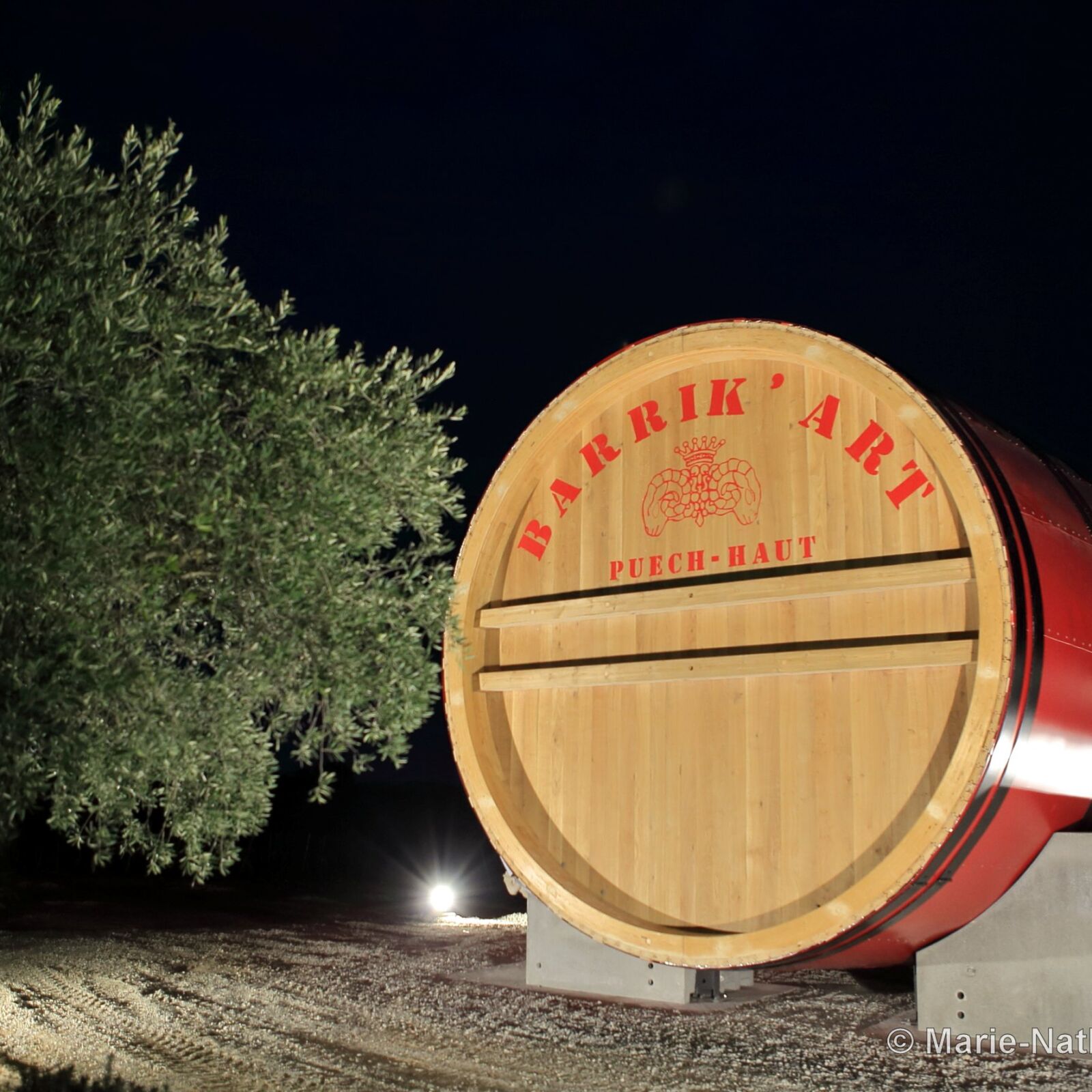
In the cellar, more than 160 artists, from the region or from all over the world, have each painted a barrel. Near the château stands the Barrik'Art, a giant barrel 12 metres long and 6 metres high, visible all year round.

THE VISIT
What you will discover
At Château Puech-Haut, the cellar is also a gallery: more than 160 barrels painted by artists. Around it, a sustainably farmed vineyard, and a château brought from Montpellier, stone by stone.
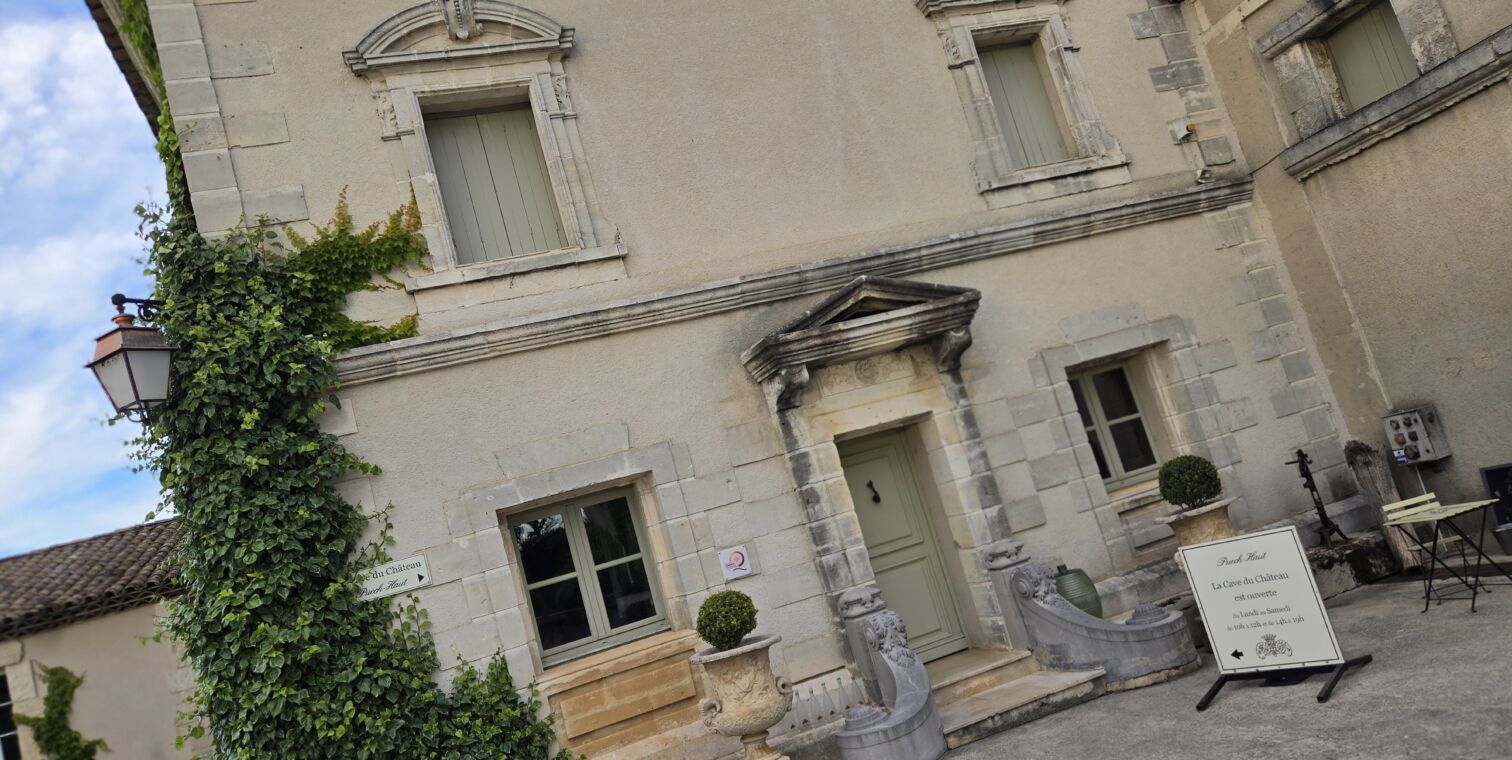
The château. It comes from elsewhere. It is the former prefecture of Montpellier, taken down stone by stone and then rebuilt in the middle of the vines. Gérard Bru, the founder, created everything here, from the wines to the estate's name. Puech means hill in Occitan, and the estate stands on one of the highest points in the area.
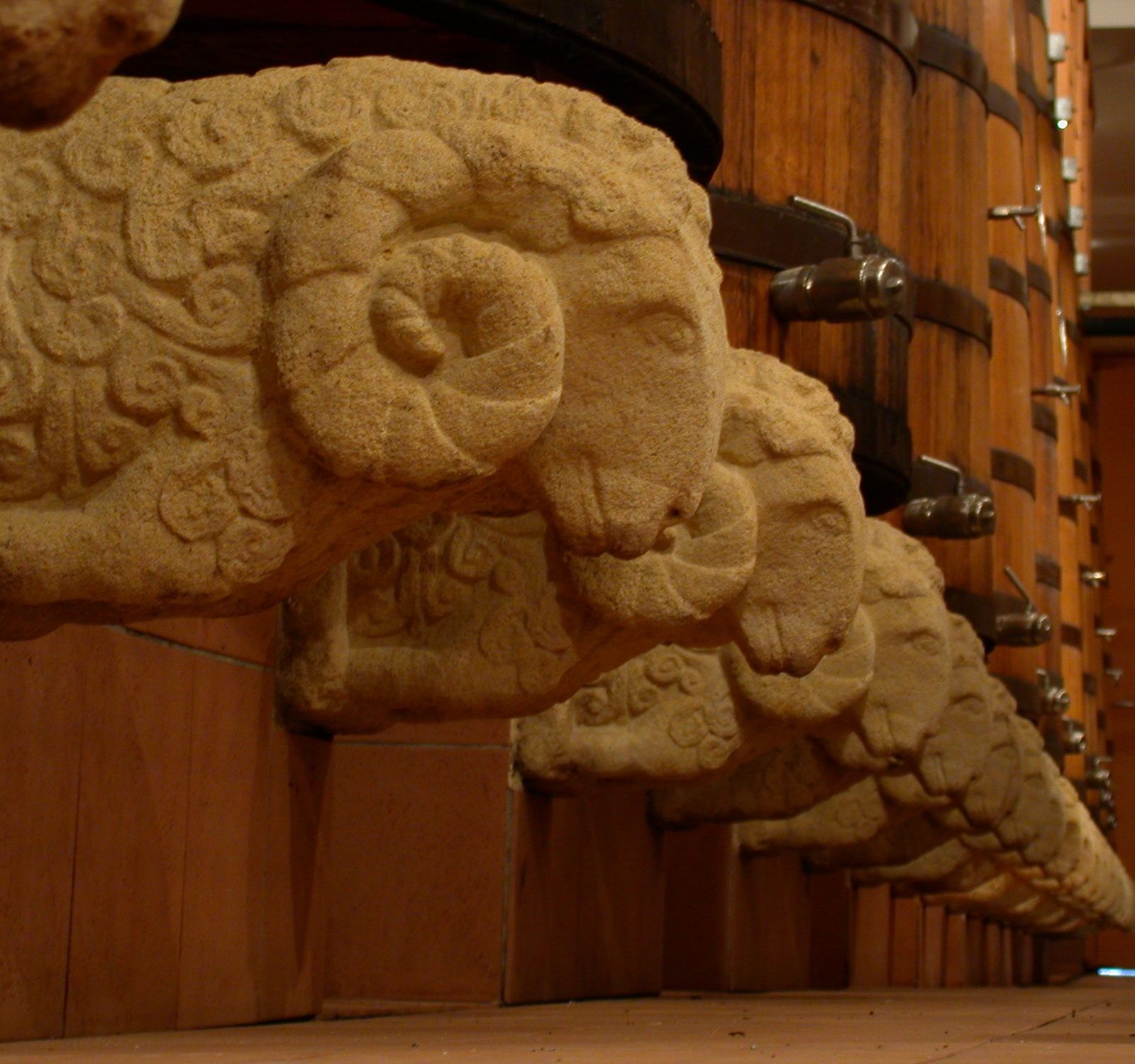
The ram's head. It was found in the estate's soil: a Roman-era stone ram's head. On display in the tasting cellar, it has become the emblem of Puech-Haut and gave its name to the Tête de Bélier cuvée.
The cellar and the barrels. More than 160 artists, from the region or from all over the world, have been given free rein to paint one of the estate's barrels. Many of these works were then reproduced on the Bib'Art, barrel-shaped wine fountains. The cellar has become a gallery, which you walk through during the visit.
The Barrik'Art. It stands near the château, visible all year round. A craftsman from the Aveyron built it with 5 tonnes of steel and 45 cubic metres of French oak: 12 metres long and 6 metres high, for a theoretical capacity of 300,000 litres. The estate presents it as the largest barrel in the world.
The vineyard. The vines grow at between 50 and 150 metres above sea level, on pebbles deposited by the Rhône in the Quaternary. They are farmed sustainably. From autumn to spring, a shepherd leads eighty sheep between the rows, replacing weeding.
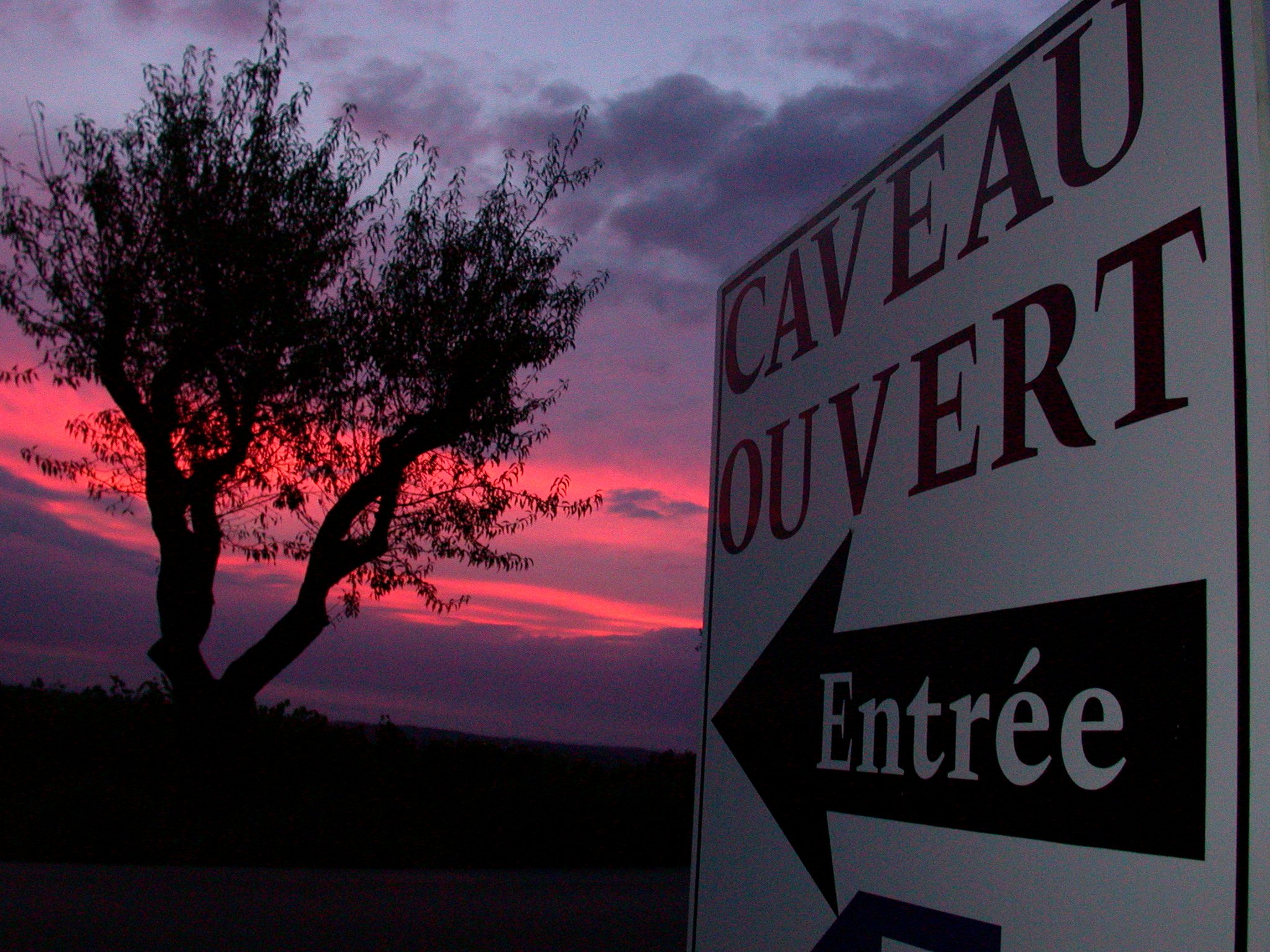
The Cave du Château. Open from Tuesday to Saturday, 10am to 12pm and 2pm to 6.30pm, it presents the estate's wines. For groups, a cellar visit and a barrel tasting among the painted barrels can be arranged on request with the estate team. It is at 2250 route de Teyran, in Saint-Drézéry.
Around the estate. About ten kilometres to the north, Pic Saint-Loup and its hillsides begin, where Puech-Haut also grows Château Lavabre. Montpellier is 16 km to the south-west, and the A9 motorway runs close by.
QUESTIONS
Visiting the estate
A few pointers before you set off for Saint-Drézéry, from the opening hours of the Cave du Château to the Barrik'Art.
Can the estate be visited?
Yes. The Cave du Château welcomes you from Tuesday to Saturday, 10am to 12pm and 2pm to 6.30pm. To see the cellar, its painted barrels and the vineyard, make an appointment with the estate team.
What is there to see at the estate?
The cellar and its barrels painted by more than 160 artists, the Barrik'Art, and the Roman ram's head on display in the tasting cellar. And the château itself, the former prefecture of Montpellier rebuilt stone by stone in the middle of the vines.
What is the Barrik'Art?
A giant barrel 12 metres long and 6 metres high, set near the château. A craftsman from the Aveyron built it with 5 tonnes of steel and 45 cubic metres of oak; its theoretical capacity reaches 300,000 litres. The estate presents it as the largest barrel in the world.
Can I taste the wines?
The Cave du Château presents the estate's wines, from Tuesday to Saturday. For groups, a cellar visit and a barrel tasting can be arranged on request with the estate team.
Where is the estate?
At 2250 route de Teyran, in Saint-Drézéry, in the Hérault, 16 km north-east of Montpellier and close to the A9 motorway. Pic Saint-Loup begins about ten kilometres further north.
Is the vineyard farmed sustainably?
Yes, all the estate's vines are farmed sustainably. From autumn to spring, a shepherd leads a flock of eighty sheep there, replacing weeding.
TO DISCOVER
The estate in detail
The history of the château and its terroirs, Château Lavabre and the other Puech-Haut estates, then the wines presented at the Cave du Château.