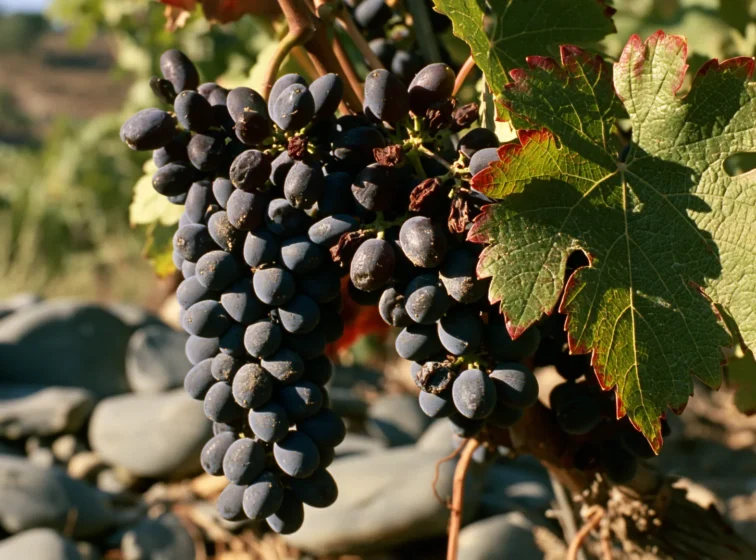
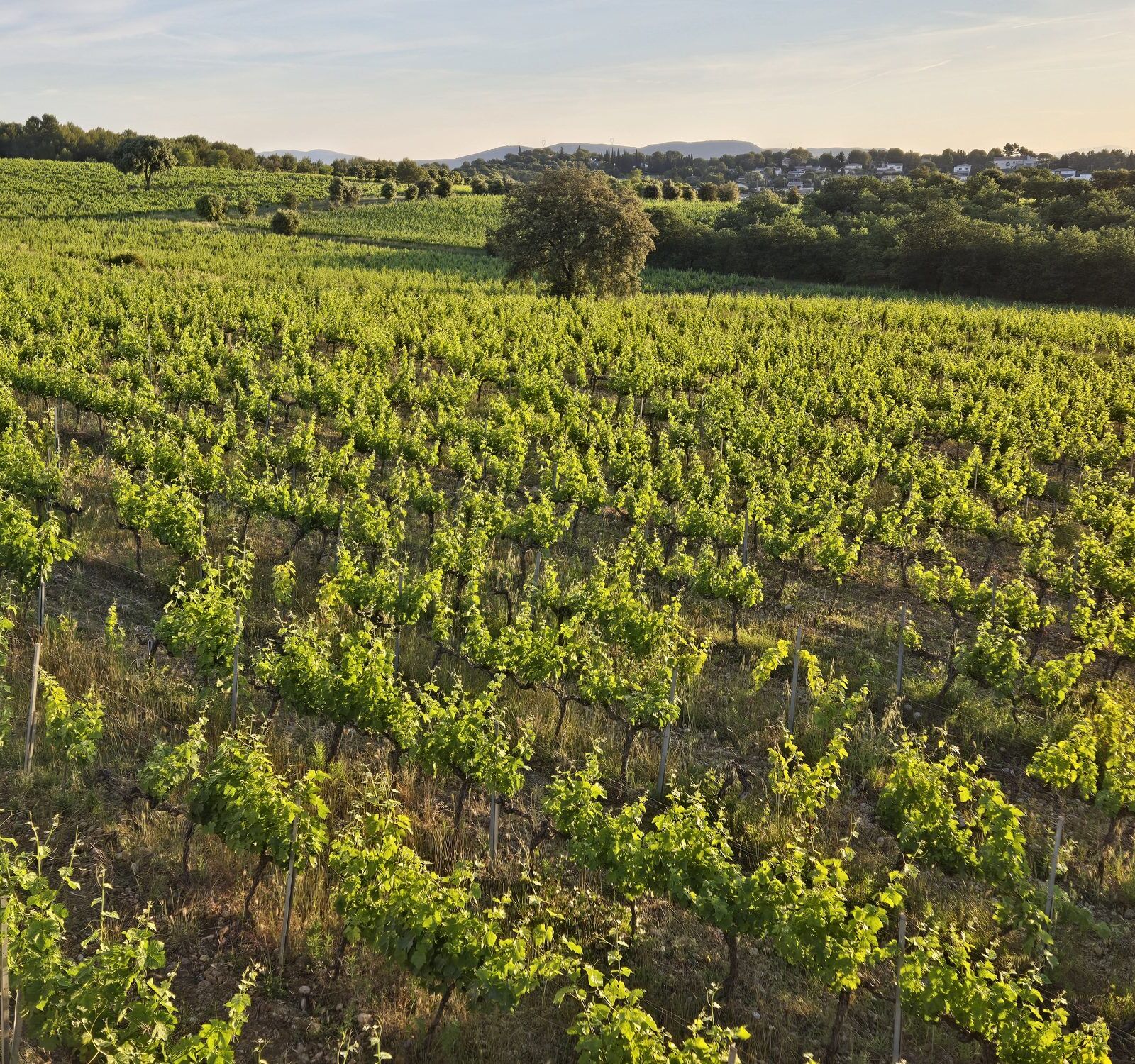
Gérard Bru planted Syrah first, with Grenache, on clay-limestone soils covered with rolled pebbles. It has remained the backbone of the estate's reds, in Saint-Drézéry as in Pic Saint-Loup.
Syrah was born in the northern Rhône Valley, on the slopes of Hermitage and Côte-Rôtie. It spread throughout the South of France, then around the world; in Australia, it is called Shiraz. Young, it smells of violet, blackcurrant and blackberry, with a hint of pepper; liquorice and spice come with time. In a blend, it is the grape that brings colour and structure, and gives the wine its ageing potential.
Saint-Drézéry. On the Puech-Haut estate, in the AOP Languedoc, it was planted from the outset with Grenache, on clay-limestone soils covered with rolled pebbles. It makes up 70% of Tête de Bélier red, completed by Grenache, Mourvèdre and Carignan. Each grape is vinified separately in concrete vats and aged for 18 months in barrels and large casks; the blend is made at bottling.
Pic Saint-Loup. Further north, Syrah makes up 80% of Château Lavabre and goes into Clos du Pic and Loup du Pic. The appellation reserves at least half of the red plantings for it. On these cooler, higher slopes, it becomes spicier, with notes of pepper and violet.
In the cellar. The Syrahs of the great reds, such as Lavabre, Clos du Pic or 40ème, spend 14 to 18 months in new barrels. 40ème has an ageing potential of 12 years, Tête de Bélier red of 10 to 12 years. Syrah also goes into rosés: Tête de Bélier, Theyron, Loup du Pic and Bib'Art.
Like all the estate's vines, the Syrahs are farmed sustainably. The soils are worked mechanically and, from autumn to spring, a flock of sheep grazes between the rows instead of weedkillers.
At the table, a Syrah red goes well with red meat, lamb, game, spicy dishes and mature cheeses. Tête de Bélier red is served between 16 and 17 °C; Clos du Pic benefits from decanting.