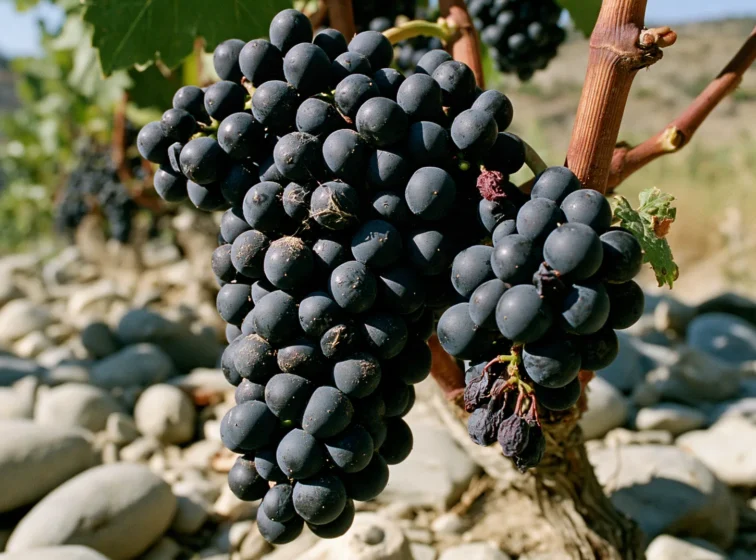
Syrah, Grenache, Mourvèdre: in this classic trio of southern reds, Mourvèdre is the most demanding. It ripens late, needs sun and gives the great blends their structure.
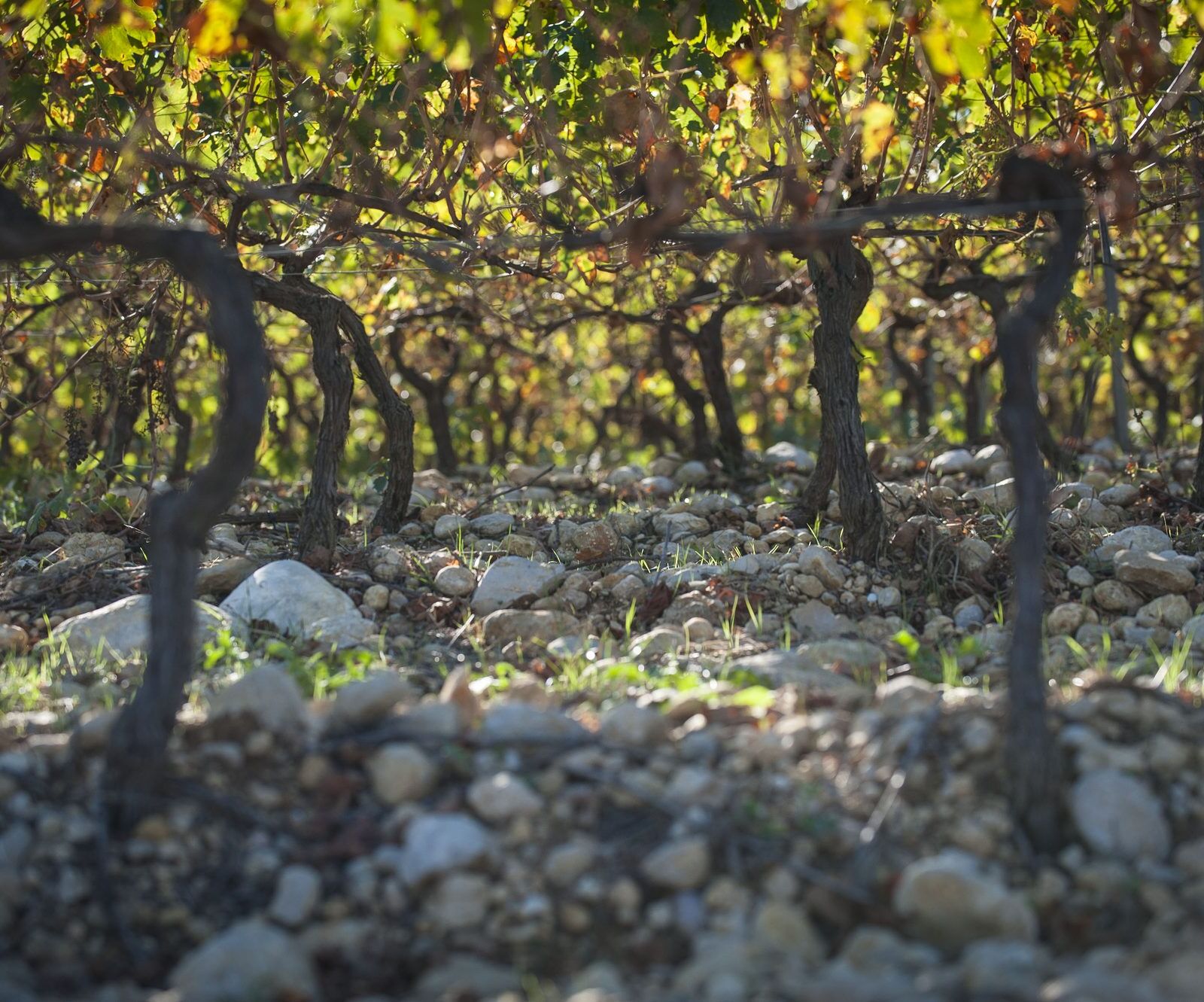
A Provençal saying goes that Mourvèdre wants « its head in the sun and its feet in the water ». This late-ripening grape needs a lot of heat to ripen. It comes from Spain, where it is called monastrell; in France, Bandol has made it its main grape, and it has settled in the Languedoc and the southern Rhône.
Its wines are deeply coloured, with tight tannins and aromas of black fruit, blackberry and spice. Age takes them towards leather, undergrowth and garrigue. In a blend, it brings structure and ageing potential. With Syrah and Grenache, it forms the classic trio of Mediterranean reds.
Tête de Bélier red contains 8%, alongside Syrah, Grenache and Carignan. Yields are limited to 25 hl/ha; each grape is vinified separately in concrete vats, then the wine is aged for 18 months in barrels and large casks. This 8% counts towards its ageing potential of 10 to 12 years.
In Pic Saint-Loup, Château Lavabre blends it with Syrah and Grenache Noir. It also goes into Loup du Pic and Clos du Pic, aged for 18 months in barrels, which keeps for around ten years. Bosc Nègre is also among the reds that contain it.
Among the rosés, it is found in Tête de Bélier rosé and Theyron rosé, where it is blended with Syrah and Grenache. Theyron is a small estate farmed sustainably; its rosé has a pale quartz colour, aromas of redcurrant and raspberry and discreet spicy notes.
In the vineyard, the estate practises sustainable farming, with mechanically worked soils and controlled grass cover between the rows.
At the table, the reds containing Mourvèdre go well with meat in sauce, daubes, lamb and game, served between 15 and 18 °C depending on the cuvée. The rosés that contain it, Theyron and Tête de Bélier, stand up well to spicy or grilled food.