

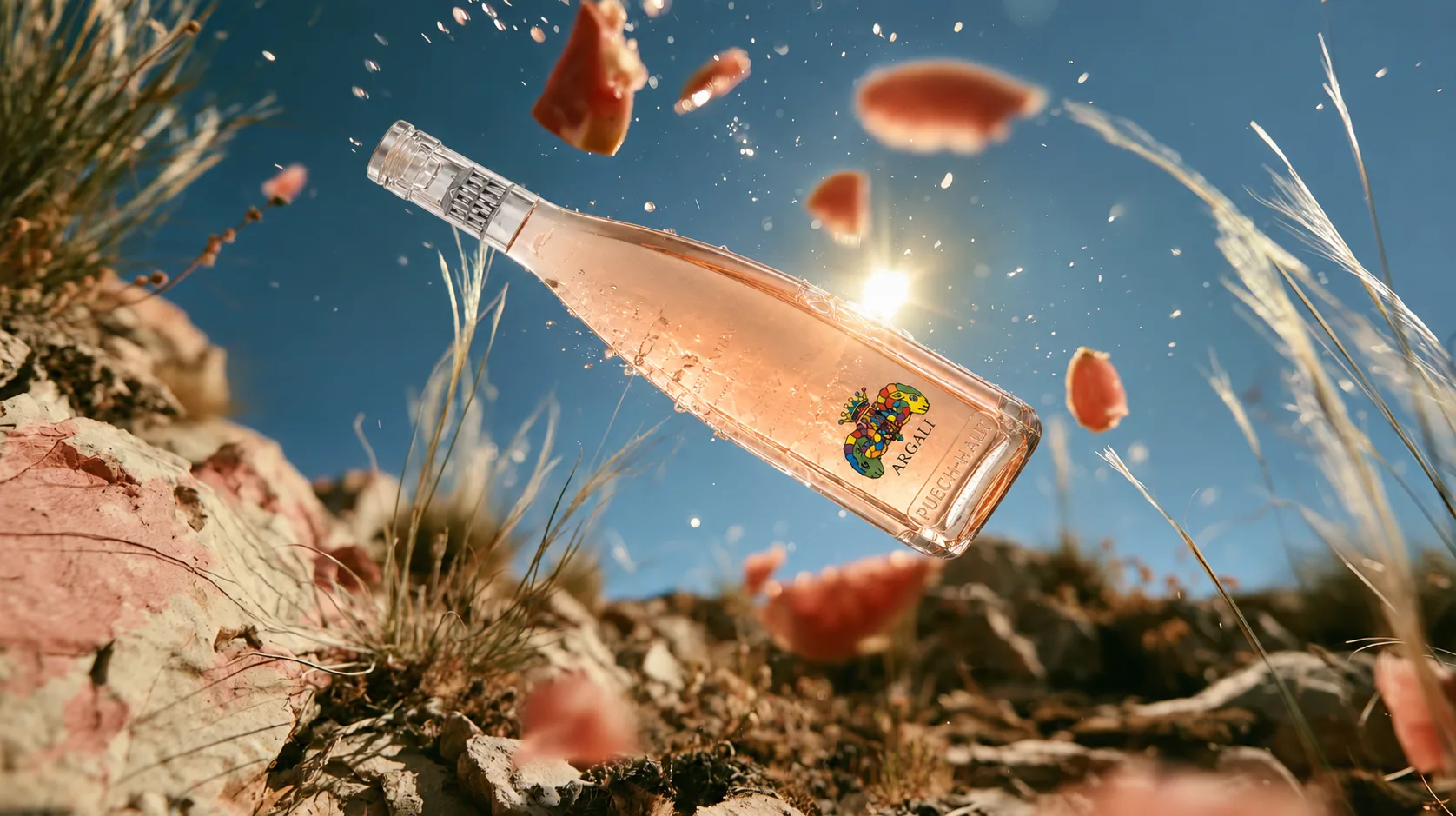
It is the rosé you recognise by its crest with spiralling horns: Argali, from Château Puech-Haut, is back with its 2025 vintage. Delicate, fresh and luminous, it is the estate's sunniest signature, the one brought out with the first fine days and found on summer tables. Here is where it comes from, how it is made, what you find in the glass and how to serve it to enjoy it fully.
Why the name Argali?
The argali is the largest of the wild sheep. It lives in the mountains of Central Asia, several thousand metres above sea level, and the males carry wide, spiralling horns. These are the horns you find on the bottle's crest. A free, sturdy animal, used to wide open spaces and the harsh light of the peaks: an image that suits a rosé born under the Languedoc sun.

At Château Puech-Haut, the argali joins a family of horned animals: that of the ram, emblem of the house and of its flagship cuvée, Tête de Bélier. The Argali range comes in three colours, each with its own personality, but it is the rosé that has become its best-known face.
A rolled-pebble terroir under the Languedoc sun
Argali is born on the estate's clay-limestone soils, covered with rolled pebbles deposited by the Rhône in the Quaternary. These pebbles hold the heat of the day and release it at night, allowing the grapes to ripen evenly. The influence of the nearby sea, for its part, brings precious freshness, especially on summer nights.
It is this balance between sun and freshness that you find in the glass. For a rosé, it is essential: ripeness brings the fruit, freshness brings the liveliness. Argali rosé blends two southern grape varieties, Grenache and Cinsault, in the IGP Pays d'Oc. Grenache brings roundness and fruit, Cinsault finesse and lightness.
Winemaking designed for freshness
It all starts with direct pressing of the grapes as soon as they reach the cellar. The juice stays in contact with the skins for only a very short time, which gives the wine its pale, delicate colour. The juice then rests in the cold to clarify naturally: this is static settling, which keeps the wine clean and precise.
Fermentation takes place at low temperature, between 12 and 14 °C. The cold slows down the work of the yeasts and preserves the most delicate aromas of the grape. Finally, malolactic fermentation is blocked: the wine thus keeps its natural acidity, which gives it all its liveliness on the palate.
Tasting the 2025 vintage
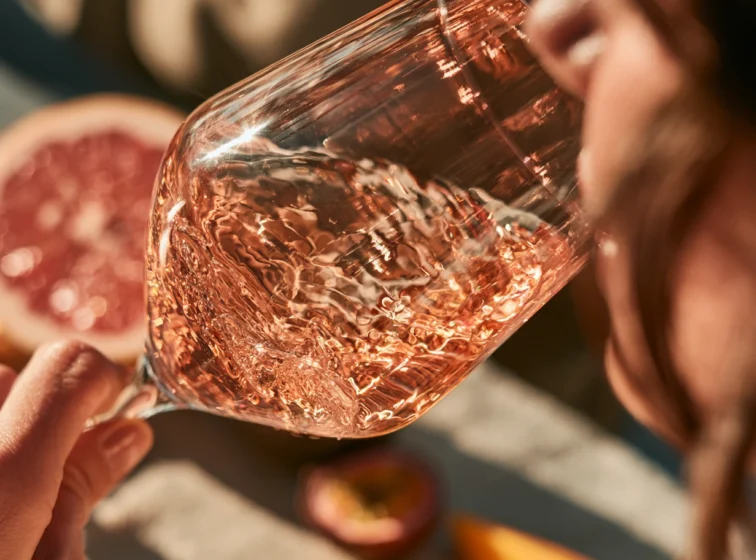
The colour is petal pink, crystal-clear, with bright glints. The fresh nose opens on aromas of exotic fruit. On the palate, Argali is lively, crisp and refreshing: a rosé for pleasure, easy to share, but also a true food rosé that holds its own throughout a meal.
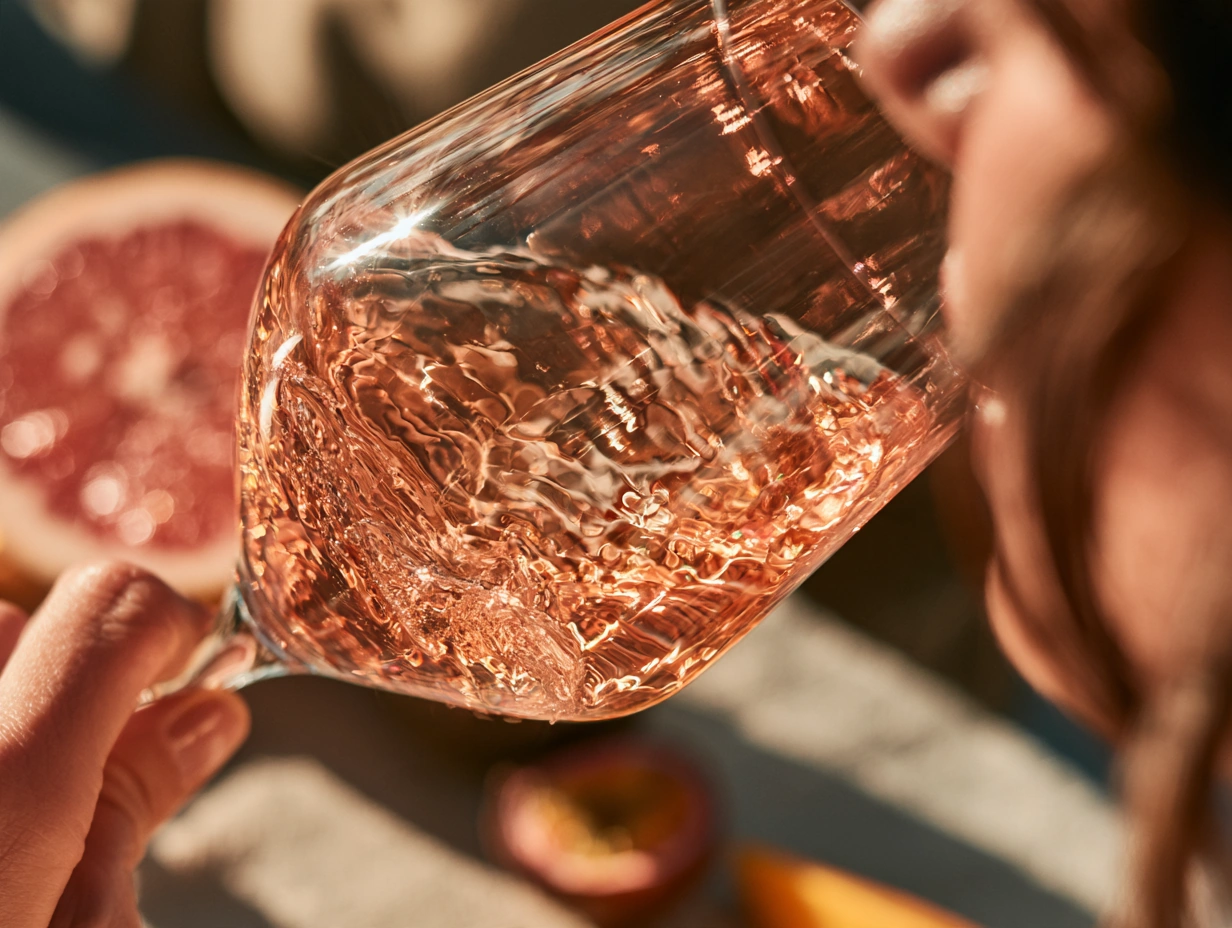
To enjoy it at its best, serve it well chilled, between 6 and 8 °C. Put the bottle in the fridge a few hours before serving, or in an ice bucket for about twenty minutes. Argali is a rosé to drink in its first year: it is enjoyed young, for its fruit and freshness. There is no point keeping it in the cellar.
What to serve with Argali rosé?
Argali goes with aperitifs as well as meals: grilled fish, barbecues, mixed salads, or simply on its own on the terrace. Its liveliness balances rich dishes and its freshness answers briny flavours. For a meal to share, a seafood paella is a natural pairing, with its flavours of saffron and shellfish.
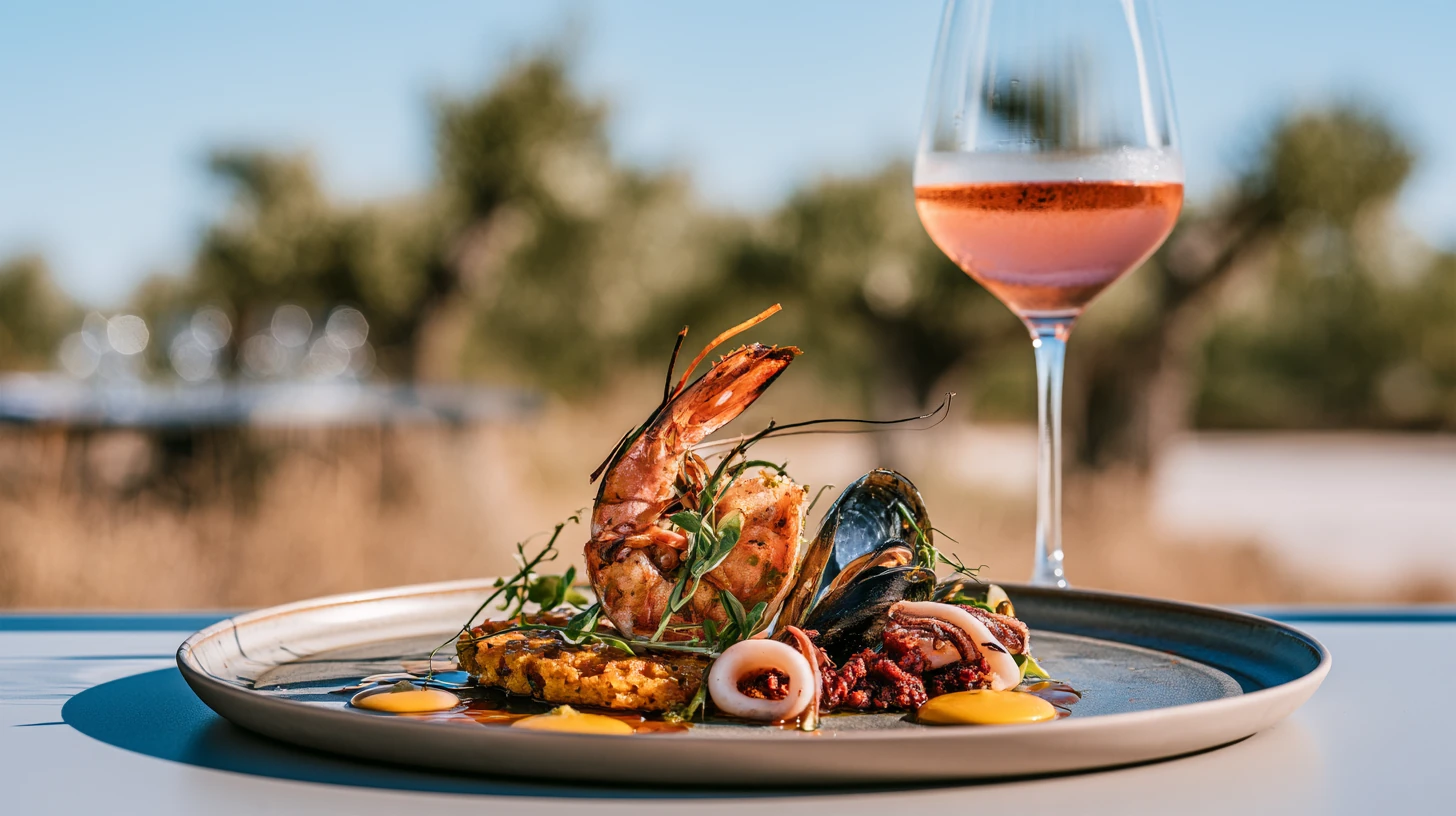
For a more elaborate dinner, try our roast sea bream fillet with beurre blanc and fennel: the liveliness of the rosé answers the softness of the sauce. Find all our ideas in our food and wine pairings.
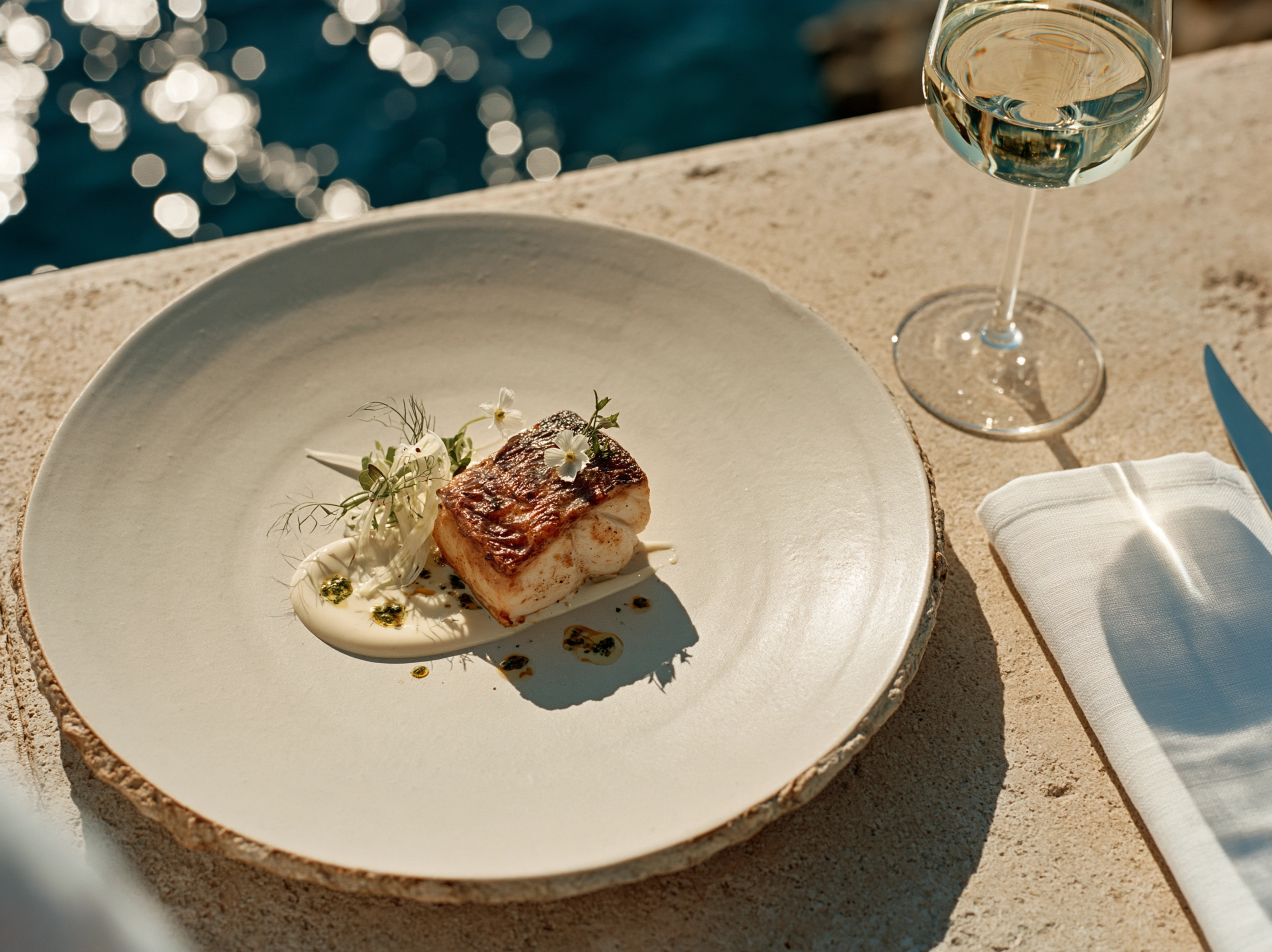
Argali also comes in white and red
In white, Argali white has a bright, pale yellow colour, an intense nose of exotic fruit, citrus and flowers, and a palate that plays between freshness and smoothness. It is perfect with shellfish, plancha cooking or Asian cuisine, served at 8 °C. Argali red has a garnet-red colour and a nose of black raspberry and blackcurrant, from the same rolled pebbles of the estate.
For the full rosé page, visit Argali rosé, and browse all our rosés. To find out where to buy it, see the Where to find our products page.
Please enjoy responsibly. Excessive drinking is harmful to your health.
 Puech-Haut