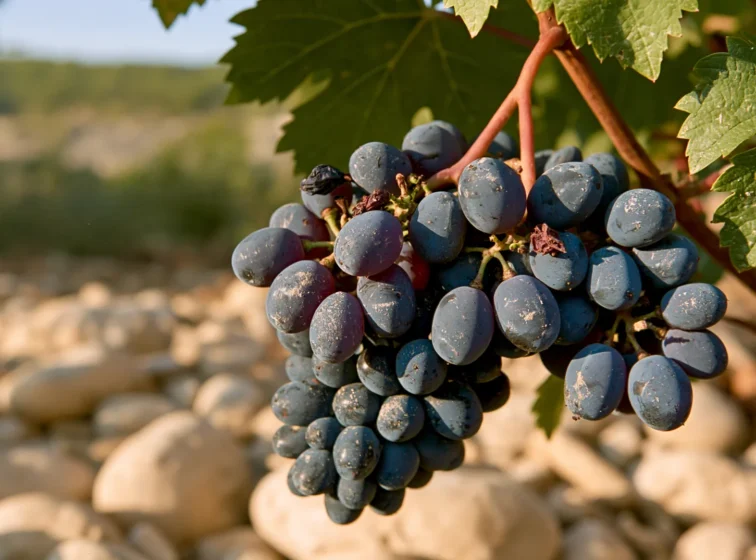
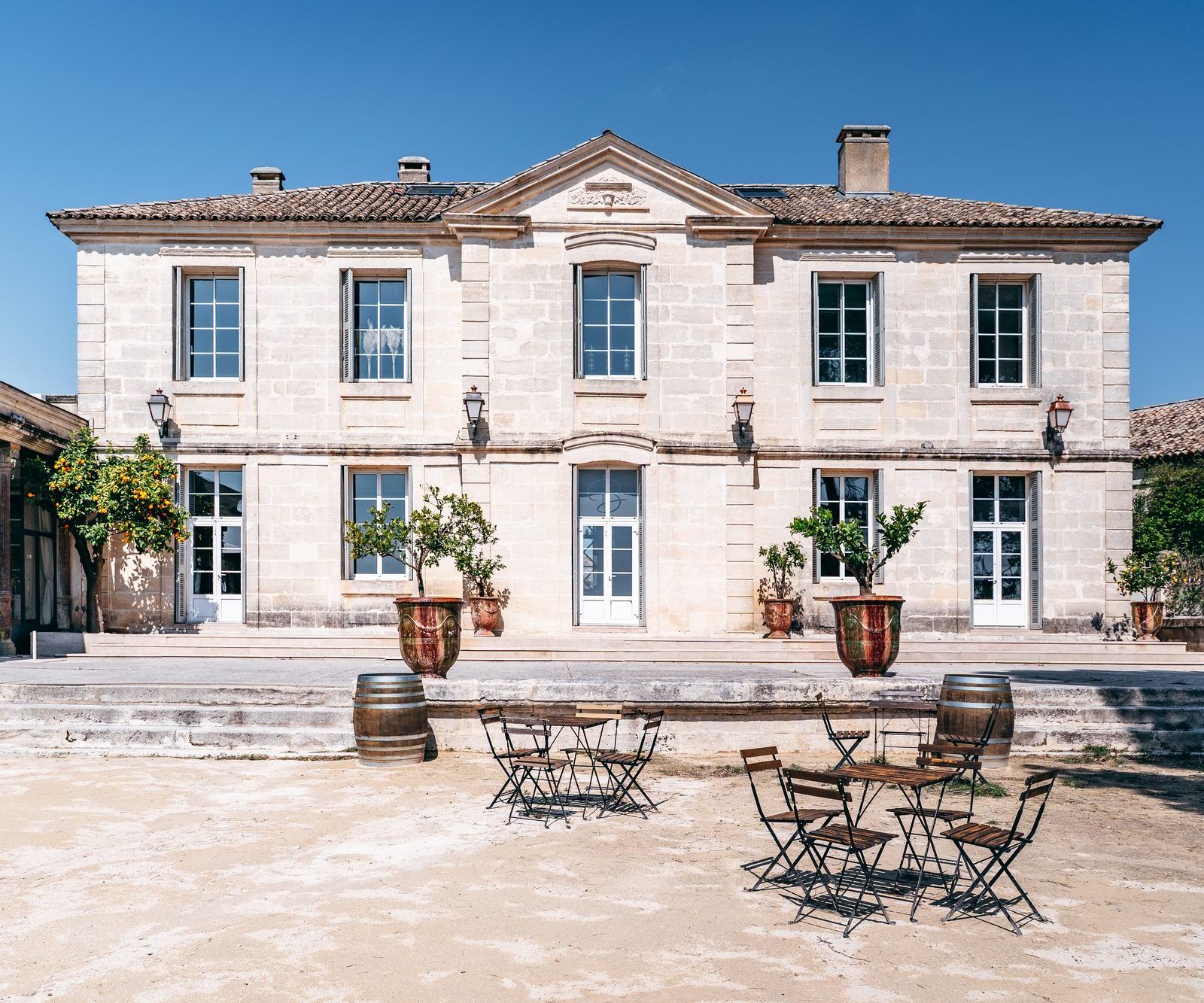
Rosés made Puech-Haut's name, and two grape varieties carry them: Grenache and Cinsault. The latter gives Argali rosé its freshness and finesse.
Cinsault is an old black grape variety, long grown in the Languedoc and in Provence. Its skin gives little colour, its tannins are light, and it keeps aromas of fresh red fruit and flowers. Its juices stay fresh and delicate. These traits make it a rosé grape. Rosés made Puech-Haut's name; Cinsault is one of their two main grape varieties, alongside Grenache, and the estate uses it for rosés only.
In the vineyard. The grapes for Argali rosé, the estate's ambassador cuvée, come from clay-limestone soils covered with Quaternary rolled pebbles, in the IGP Pays d'Oc. The blend is 40% Cinsault and 60% Grenache, with yields of 45 hl/ha. The vines are farmed sustainably. The soils are worked mechanically and, from autumn to spring, a flock of eighty sheep grazes between the rows instead of weedkillers.
In the press, then in the vat. The grapes are pressed directly, without maceration, meaning the juice is not left in contact with the skins. The juice then ferments at a low temperature, between 12 and 14 °C, and malolactic fermentation is blocked. Every step has the same aim: to preserve the freshness of the fruit.
In the glass. A pale pink colour, a fresh nose of grapefruit and exotic fruit, a lively, crisp palate. The two grapes share the roles: Grenache brings roundness, Cinsault brings tension and delicacy.
In the Bib'Art. Bib'Art rosé is the estate's second rosé containing Cinsault, blended with Grenache and Syrah. The Bib'Art is a cask-shaped wine fountain, dressed in a work by an artist.
At the table. Cinsault rosés go well with salads, grilled fish, stuffed vegetables, barbecues and Mediterranean cooking. Argali rosé is served between 6 and 8 °C. Like other Cinsault rosés, it is best drunk young, for its freshness, within the year; until then, keep it at a constant temperature with good humidity.