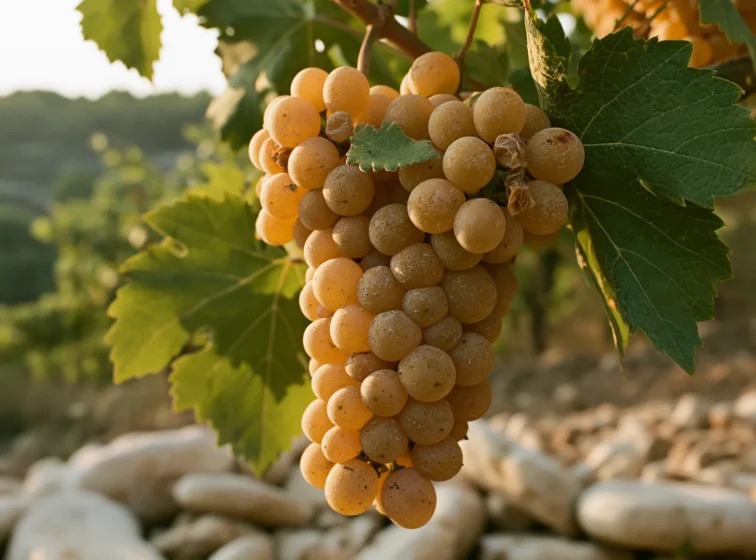
Arriving from the Rhône over the years, Marsanne joined the Syrah and Grenache planted at the outset. With Roussanne, it forms the estate's white duo.
A village in the Drôme bears the same name as this white grape. Marsanne comes from the northern Rhône Valley, where it is the main grape of the white Hermitage wines. It spread to the southern Rhône and the Languedoc, almost always blended with Roussanne. Their pairing is a Rhône tradition, from the whites of Hermitage to those of the Languedoc.
When young, Marsanne offers aromas of almond, pear and acacia blossom, in a full, round wine. This richness on the palate, that feeling of volume, is its hallmark. It ages well and develops over time towards honey and beeswax. In a blend, it brings the body, while Roussanne brings the finesse.
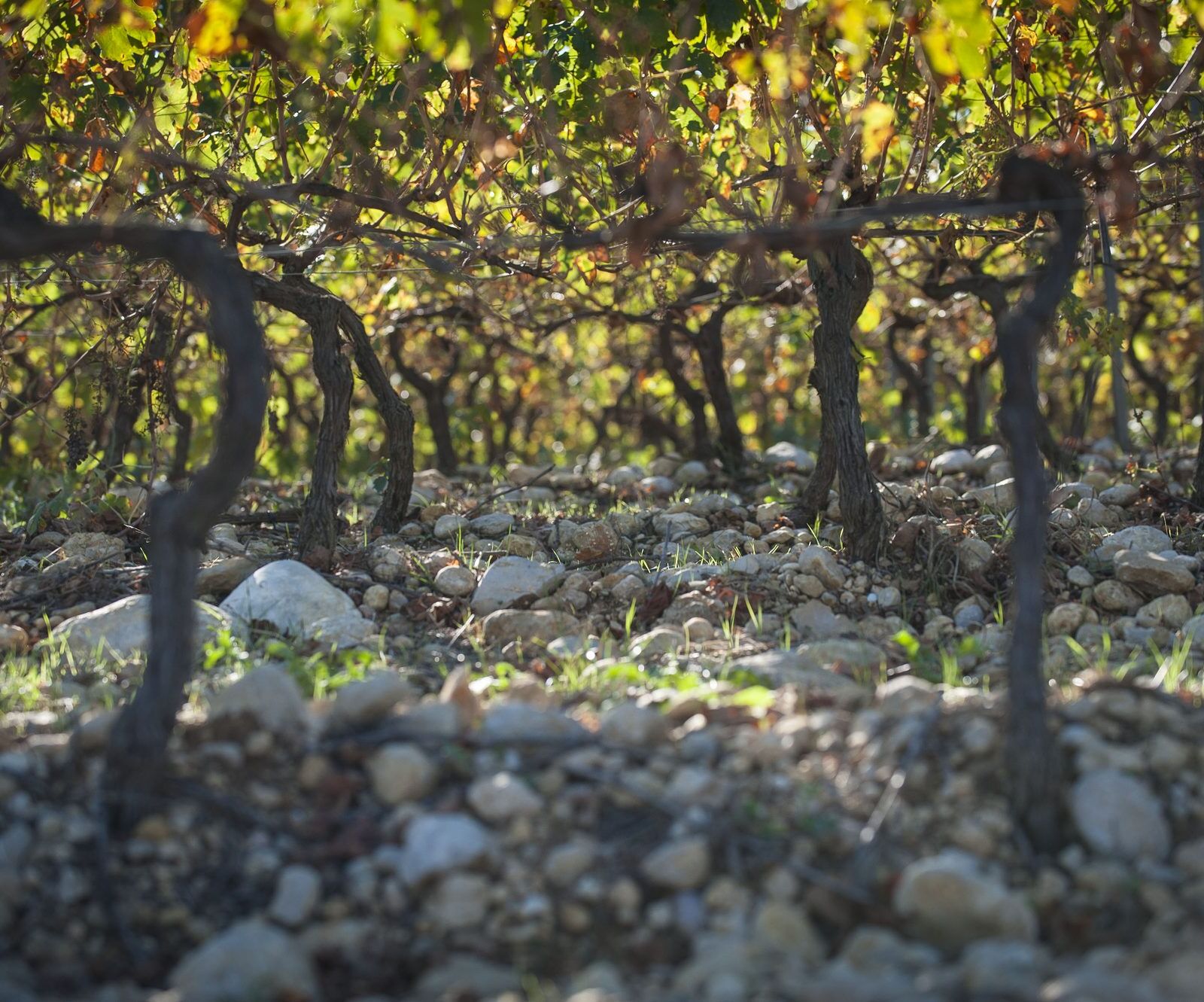
White grapes cover around a quarter of the estate's vines in Saint-Drézéry. Marsanne grows there alongside Roussanne, Muscat and Viognier, on clay-limestone soils covered with rolled pebbles. These Rhône grapes gradually joined the Syrah and Grenache planted at the outset. The vines are farmed sustainably: the soils are worked mechanically, some grass cover is kept to keep the soil alive, and a flock of eighty sheep replaces weedkillers for part of the year.
It is found in two whites. Prestige white, the core of the range, blends Marsanne and Roussanne: a bright, golden wine, round and aromatic, with notes of white-fleshed fruit. Tête de Bélier white, the white version of the flagship cuvée, has a golden colour and notes of smoke, yellow-fleshed fruit, honey and gingerbread. In both, it brings roundness and richness. Argali white, presented above with Tête de Bélier white, completes Puech-Haut's selection of whites.
These whites go well with shellfish, fish in sauce, poultry in cream sauce and risottos. Serve them chilled. Young, they are enjoyed for their roundness and fruit; a few years of ageing take them towards honey and beeswax.