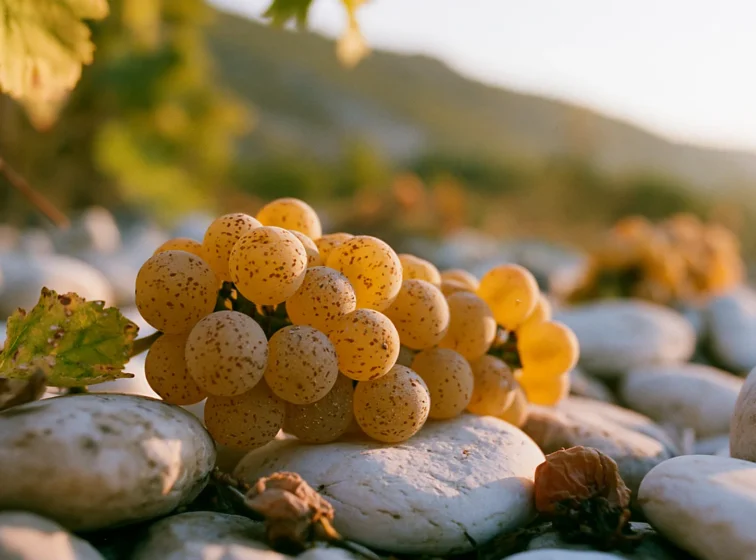
Of the white grapes from the Rhône that Puech-Haut planted after Syrah and Grenache, Viognier is the most aromatic. It brings perfume to Tête de Bélier white.
Viognier comes from the northern Rhône Valley, where it makes two white appellations, Condrieu and Château-Grillet. It long remained a rarity there, before spreading throughout the South of France, the Languedoc in particular, and then around the world.
It is one of the most aromatic white grapes. Apricot, peach and white flowers dominate, sometimes with a note of violet. Its wines are dry, rich and full, and fairly low in acidity. Richness here means that feeling of roundness on the palate. In a blend, it is the grape that brings the perfume.
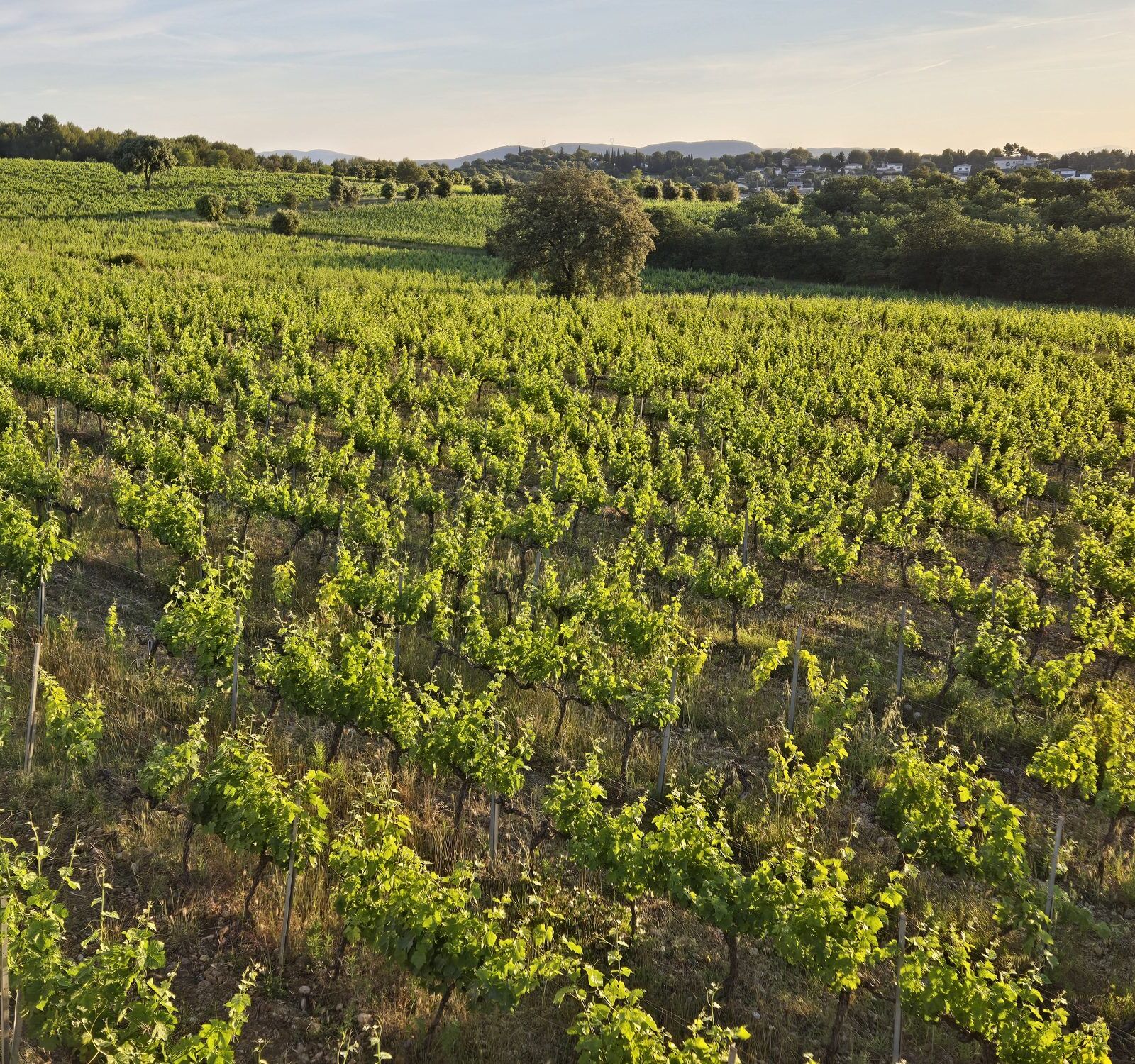
The estate has given it a place among its white grapes in Saint-Drézéry, which cover around a quarter of the vines, with Roussanne, Marsanne and Muscat. Over the years, they have all joined the Syrah and Grenache planted at the outset, on clay-limestone soils covered with rolled pebbles.
At the estate, its cuvée is Tête de Bélier white, the white version of the flagship cuvée, where it sits alongside Roussanne, Marsanne and Grenache Blanc. This white has a golden colour and notes of smoke, yellow-fleshed fruit, honey and gingerbread; Viognier lends it part of its fruit aromas.
Its vines, like all the estate's vines, are farmed sustainably. The soils are worked mechanically, some grass cover is kept to keep the soil alive, and a flock of eighty sheep grazes there from autumn to spring instead of weedkillers.
Viognier is served at around 10 to 12 °C. Too cold, it loses its apricot and peach aromas; a fairly wide white wine glass helps it open up. It goes well with poultry, fish in sauce, shellfish and gently spiced dishes, such as a light curry or a tagine.
It is most often drunk in its first few years, when its fruit aromas are at their peak. Blended with other Rhône white grapes, it can age for longer.