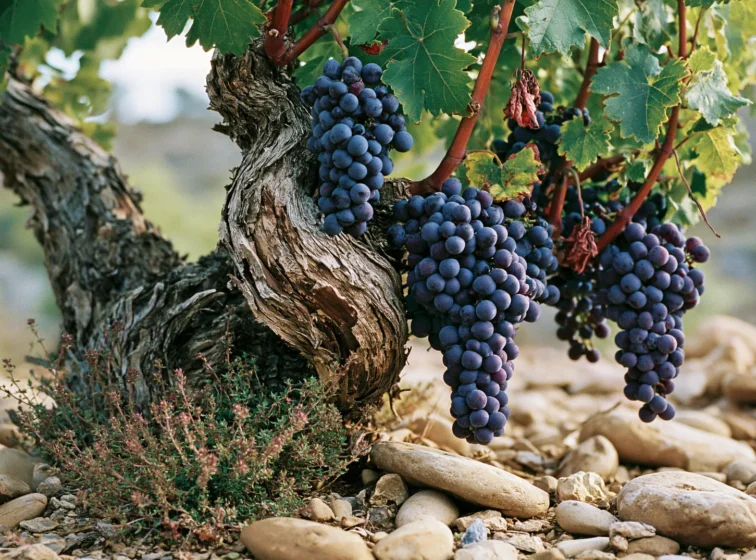
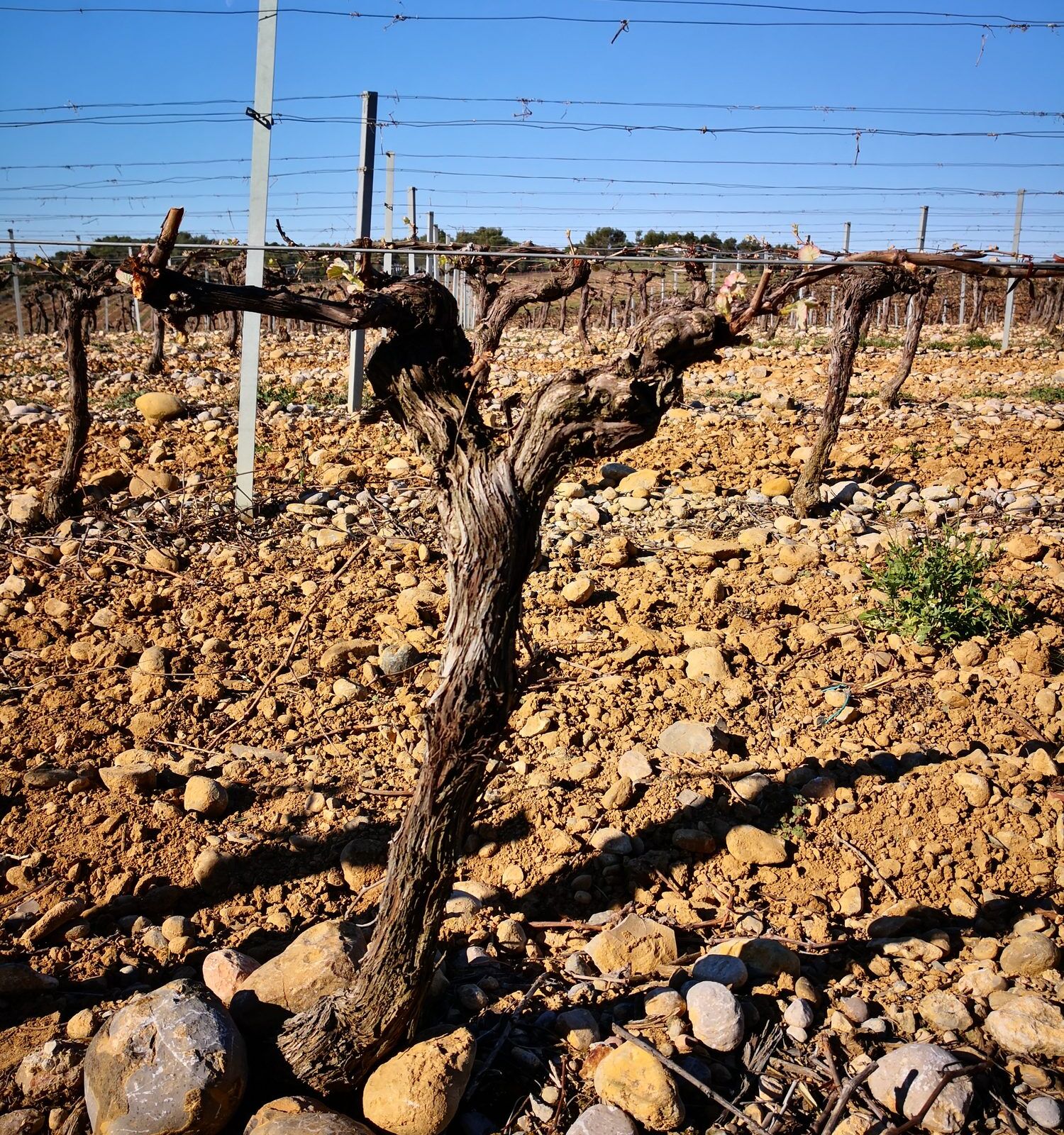
By buying neighbouring plots over the years, Puech-Haut took on old Carignan vines, now 50 to 60 years old. In the Languedoc, vines of this age have become rare.
This Mediterranean black grape comes from Spain; it takes its name from the town of Cariñena, in Aragon. For much of the 20th century, it was the most widely planted grape in the Languedoc. It was then largely pulled up to make way for Syrah, Grenache and Mourvèdre.
The vines that remained have grown old, and their age is now what makes them valuable. An old Carignan vine yields little, with concentrated grapes: fewer bunches, and more substance in each. Few estates have kept such vines. Puech-Haut took some on by buying neighbouring plots over time; they are now 50 to 60 years old and grow in the AOP Languedoc.
In the glass, Carignan makes deeply coloured wines with notes of black fruit, spice and garrigue. Its fairly marked acidity keeps Mediterranean blends fresh. At the estate, that is what is expected of it: colour and freshness, alongside Syrah and Grenache.
It goes into four of the estate's reds. Prestige red, the core of the range, contains 15%. Tête de Bélier red, the cuvée that made the estate's name, contains 2%. In both blends, Syrah and Grenache dominate. 40ème, made without sulphur and aged for 18 months in new barrels, also blends it with Syrah and Grenache. The fourth red it goes into is Quercus.
Blended with Syrah and Mourvèdre, these old Carignans keep well. Tête de Bélier red, which contains some, has an ageing potential of 10 to 12 years, 40ème of 12 years.
The vines are farmed sustainably. The soils are worked mechanically and some grass cover is kept to keep the soil alive. From autumn to spring, a shepherd leads eighty sheep between the rows, instead of weedkillers.
The reds containing Carignan are served between 16 and 17 °C, with traditional regional cooking: charcuterie, grilled meat, slow-cooked dishes or strong cheeses.